
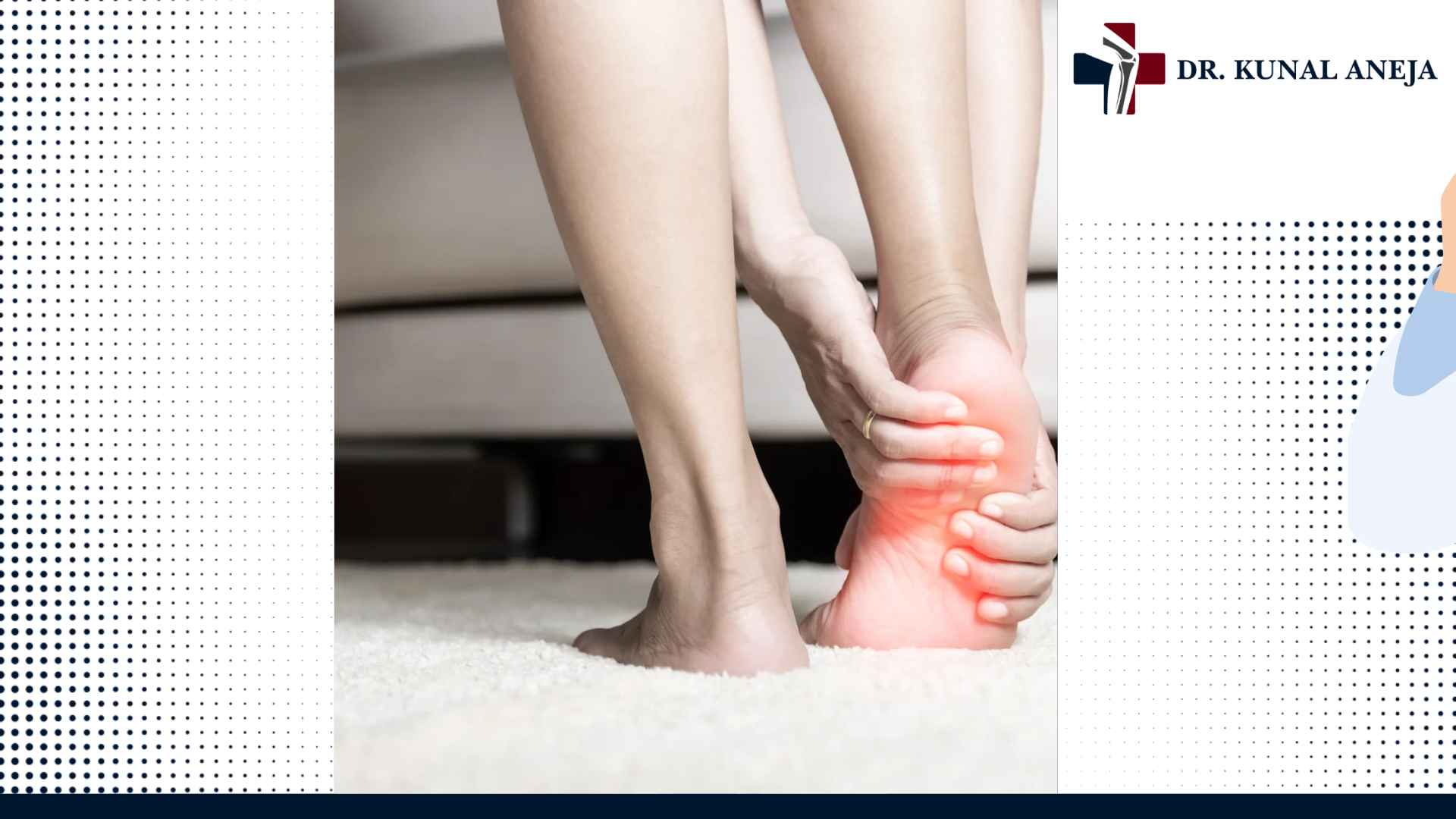
Plantar fasciitis treatment in Delhi, as elsewhere, mostly means simple, patient steps: stretching, supportive footwear or orthotics, load management and time. Most people improve without surgery. Injections, shockwave therapy and surgery are usually kept for heel pain that hasn’t settled after months of proper care. The classic sign is morning heel pain, sharp with the first steps out of bed, that eases as you walk. An orthopaedic doctor can confirm the cause, because not all heel pain is plantar fasciitis. You can book an appointment here.
Overview
Here’s a scene you might know (a hypothetical, but a very common story). The alarm goes off, you swing your feet to the floor and take that first step. A stabbing pain shoots through your heel, so sharp you wince and hobble to the bathroom. By the time you’ve made tea, it’s eased off. By evening, after a day on your feet, it’s back.
You tell yourself it’s nothing. You buy softer slippers. Weeks turn into months.
Plantar fasciitis is one of the most common causes of heel pain, and it’s stubborn rather than dangerous. Here’s what trips people up: many hear “heel spur” and assume they need surgery to remove it. Usually, they don’t.
This guide covers what plantar fasciitis is, how to spot it, which treatments have support, what to avoid and when to see an orthopaedic doctor. It’s general information, and your own plan should follow an examination. For a wider picture, see common bone and joint problems treated by orthopaedic doctors in Delhi.
What Is Plantar Fasciitis?
In plain words
● The plantar fascia is a thick band of tissue under the foot, from the heel bone to the toes
● It supports the arch and takes a lot of load when you walk
● Plantar fasciitis means that band is irritated or strained, usually near the heel
● It causes heel pain, most noticeably after rest
● It’s usually self-limiting, though it can take many months
Think of it as an overloaded band under your foot, not a bone problem.
Meet Dr. Kunal Aneja
Dr. Kunal Aneja is a Senior Consultant Orthopaedic Surgeon and Managing Director of Naveda Healthcare Centre, Delhi, with interests in joint replacement, sports medicine, joint preservation and complex trauma. His listed qualifications include MBBS, MS, DNB, M.Ch (Edinburgh) and a Diploma in Football Medicine (FIFA). He consults at Naveda Healthcare Centre, Max Super Specialty Hospital, Shalimar Bagh and Saroj Medical Institute, Rohini.
Professional Highlights
● Orthopaedic assessment for bone and joint problems, with a sports medicine background
● Physiotherapy and rehabilitation information on the site
● Orthopaedic second opinion service
● Clinic at 57 & 61, Pocket D-15, Sector-7, Rohini, Delhi
Heel pain that won’t settle? WhatsApp your question and any reports to the clinic.
Plantar Fasciitis Symptoms and Morning Heel Pain
The pattern is what gives it away. According to a 2011 review in American Family Physician, heel pain is typically worst with the first steps after getting up in the morning or after sitting for a long time. It often eases with walking, but can build up again by the end of a day of standing or walking.
Common plantar fasciitis symptoms include:
● Sharp, stabbing morning heel pain with the first steps
● Pain after sitting for a long time, such as after a drive or a film
● Pain at the inner front edge of the heel, where you can press and find the tender spot
● Pain that eases as you warm up, then returns by evening
● A tight calf or Achilles tendon
See a doctor soon if
● You can’t put weight on the foot
● There’s significant swelling, bruising or redness
● You have numbness, tingling or burning in the foot
● The pain began after an injury or fall
● You have diabetes or poor circulation
● The pain wakes you at night or doesn’t improve over several weeks
Why Does It Happen?
Plantar fasciitis usually comes from repeated overload. The AFP review lists risk factors including:
● Very flat feet or very high arches
● Excessive running
● Being overweight (a BMI over 30)
● Jobs with a lot of standing or walking
● A sedentary lifestyle, then a sudden increase in activity
● A tight Achilles tendon or tight foot muscles
● Differences in leg length
Everyday habits can add to it too, such as hard floors, flat chappals worn all day, or weekend sport after a week at a desk. Some of these you can change.
Heel Spur: Do You Need It Removed?
A heel spur is a small bony growth on the underside of the heel bone. It shows on X-rays and often gets the blame. But the AFP review points out that a spur on an X-ray doesn’t confirm plantar fasciitis, because spurs also occur in people with no heel pain. Many people have a spur and no symptoms.
So treating the spur isn’t usually the goal. Treating the overloaded tissue is. That’s why X-rays aren’t always needed at the start, though a doctor may order one to rule out other causes.
Heel Pain Treatment Starts With the Right Diagnosis
Heel pain has more than one cause. The AFP review advises considering other diagnoses if the story or examination isn’t typical, such as nerve entrapment, stress fracture or Achilles tendon problems. Others include:
● Arthritis or inflammatory conditions. See our post on whether you need an orthopaedic or a rheumatologist
● Nerve compression in the foot
● A stress fracture of the heel bone
A proper examination, and sometimes ultrasound or MRI, helps sort this out.
Plantar Fasciitis Treatment in Delhi: What Has Support
Here’s the reassuring part. The AFP review describes plantar fasciitis as self-limiting, usually improving within a year regardless of treatment, and says around 90% of patients improve with conservative care over weeks to months. Symptoms lasting six months or more are called chronic. Treatment aims to speed up the process and ease the pain in between.
1. Load Management
Cut back on the activities that set it off for a while. You don’t need to be on bed rest, but you may need to reduce running, long walks and standing on hard floors. Build back gradually.
2. Plantar Fasciitis Exercises and Stretching
Stretching is a mainstay. The AFP review says progressive stretching of the plantar fascia and the small muscles of the foot reduces pain, and lists a tight Achilles tendon as a risk factor, which is why calf stretches are often included.
Common starting points (check with your doctor or physio first)
● Plantar fascia stretch: sit, cross the affected foot over the other knee, pull the toes back toward the shin and hold for around 10 seconds, repeated a few times
● Calf stretch: hands on a wall, the affected leg back with the heel down, and lean in gently
● Towel stretch: sit with the leg out, loop a towel around the forefoot and pull toward you
● Toe curls or picking up a towel with your toes, to wake up the small foot muscles
Doing a stretch before your first steps out of bed can take the edge off morning heel pain. A physiotherapist can tailor the plan. The clinic’s exercises page has general information.
3. Plantar Fasciitis Orthotics and Footwear
The AFP review says prefabricated and custom orthotics reduce heel pain and improve foot function, and that custom ones may not reduce pain more than off-the-shelf versions. Custom orthotics combined with a night splint may give better relief.
Practical footwear tips:
● Choose shoes with arch support and a cushioned heel
● Avoid walking barefoot on hard floors
● Replace worn-out running shoes
● Don’t wear flat chappals all day
4. Night Splints
Night splints hold the foot gently stretched while you sleep. The AFP review says they improve pain, but many people struggle to keep using them because of discomfort and disturbed sleep. Some versions are better tolerated than others.
5. Pain Relief
Short-term pain relief, ice or rolling the arch over a cold bottle can help settle flare-ups. Avoid long-term painkiller use without medical advice.
6. Steroid Injections
The AFP review says corticosteroid injections can be effective, but warns of risks, including fat pad atrophy and rupture of the plantar fascia. That’s why injections are a decision to discuss carefully with a doctor, not a quick fix, and not something to repeat casually.
7. Shockwave Therapy
Extracorporeal shockwave therapy is usually considered for chronic cases after at least six months of ineffective conservative treatment, according to the AFP review. It also describes the evidence as conflicting, and a 2005 meta-analysis found a benefit for first-step pain that wasn’t clinically significant on a pain scale. Newer research may differ, so ask about current evidence before paying for it.
When Is Surgery Considered?
Surgery is rarely needed. The AFP review says plantar fascia release is considered only after at least six months of conservative care when all measures have failed. It lists risks including flattening of the arch, nerve injury, heel bone fracture and a long recovery. So surgery is a last resort, after a careful discussion. If someone suggests it early, getting a second opinion is reasonable.
What to Avoid
● Ignoring it and walking through sharp pain for months
● Walking barefoot or in flat slippers on marble floors
● Buying an expensive custom insole without a diagnosis
● Repeated steroid injections
● Assuming a heel spur must be surgically removed
Recovery: What to Expect
Recovery is rarely quick. Most people improve over weeks to months. Relapses can happen if you rush back. A sensible approach:
● Keep stretching even when you feel better
● Return to running and sport in steps
● Keep supportive footwear for daily use
● Reassess with your doctor if there’s no improvement in 6 to 8 weeks
If heel pain persists, an orthopaedic doctor can check for other causes and discuss the next step. See also our note on whether you need a doctor or a physio.
Why Choose Dr. Kunal Aneja for Foot and Heel Pain Assessment?
Key advantages
● An orthopaedic surgeon with sports medicine interests
● Assessment first, with non-surgical options considered before surgery
● Honest guidance on whether further procedures are needed
● Online consultation and second opinion services
● Clinic in Rohini with hospital consultations at Max Super Specialty Hospital, Shalimar Bagh and Saroj Medical Institute
Learn more about Dr. Kunal Aneja, or book an appointment.
What Are the Benefits of a Proper Assessment?
✔ Know whether it’s plantar fasciitis or something else
✔ A plan that fits your work, footwear and activity
✔ Avoid unnecessary injections or procedures
✔ Safer, guided stretching
✔ Clarity on heel spurs and what they mean
Staying Informed
For general bone and joint tips, follow the clinic on Instagram, Facebook and YouTube. Results vary, and no outcome can be guaranteed.
Why Do Delhi Patients Choose Dr. Kunal Aneja?
● Bone and joint expertise across shoulder, elbow, knee and hip
● Straightforward advice on surgical and non-surgical choices
● Easy contact via phone, WhatsApp or the contact page
● Updates on Instagram
● Convenient Rohini location
Conclusion
Plantar fasciitis is common, annoying and usually manageable. Stretch, support your arch, manage your load and give it time. Don’t chase the heel spur, and be careful with repeated injections or early surgery. If heel pain isn’t settling, or the pattern doesn’t fit, Dr. Kunal Aneja’s clinic can help you work out the next step.
Contact Dr. Kunal Aneja
Email: drkunalaneja@gmail.com
Phone: +91 98112 11503, +91 98112 16622
WhatsApp: Message the clinic
Follow on: Instagram | Facebook | YouTube
Book your consultation with Dr. Kunal Aneja here
FAQs
What is the usual plantar fasciitis treatment in Delhi?
It’s usually stretching, supportive footwear or orthotics, load management and time, with injections, shockwave or surgery kept for persistent cases. An orthopaedic doctor can tailor the plan after an examination.
What is the right heel pain treatment?
It depends on the cause. Plantar fasciitis is common, but heel pain can also come from nerves, a stress fracture or the Achilles tendon, so get it checked if it doesn’t settle.
What are the plantar fasciitis symptoms?
Stabbing pain at the heel with the first steps in the morning or after sitting, easing with walking and often returning by evening.
Which plantar fasciitis exercises help?
Plantar fascia and calf stretches are commonly used, along with strengthening of the small foot muscles. A physiotherapist can guide you.
Do I need to remove a heel spur?
Usually not. Spurs also occur in people without pain, so they don’t confirm the diagnosis. Treatment targets the overloaded tissue.
Why is my heel pain worst in the morning?
Morning heel pain is typical of plantar fasciitis, as the tissue tightens during rest and the first steps stretch it suddenly.
Do plantar fasciitis orthotics help?
Prefabricated and custom orthotics can reduce heel pain, according to a 2011 AFP review, and custom ones may not do better than off-the-shelf ones.
How long does it take to heal?
It varies, from weeks to many months, and it usually improves within a year even without treatment. Results vary, and no outcome is guaranteed.