

For a mild sprain or strain, starting with a physiotherapist is usually reasonable. See an orthopaedic doctor first if you suspect a fracture or dislocation, cannot bear weight, or the joint feels unstable. If physiotherapy has not helped after 6 to 8 weeks, get a surgeon’s opinion.
Overview
Someone twists a knee on the football pitch, or a shoulder complains after a cricket season, and the next question is practical: do I book a doctor or a physio? Get it wrong in one direction and a torn ligament is treated as a “strain” for months. Get it wrong the other way and a simple sprain turns into scans and appointments it never needed. Choosing the right sports injury specialist in Delhi is mostly about knowing what kind of injury you have, and getting it assessed early is what keeps the decision simple.
Dr. Kunal Aneja is an orthopaedic surgeon with extensive training in arthroscopic, minimally invasive surgery, practising at Naveda Healthcare Centre in Rohini and Max Super Specialty Hospital, Shalimar Bagh. He treats a large share of knee, shoulder and ligament injuries, and works closely with physiotherapists on recovery.
What is the difference between a doctor and a physiotherapist?
They do different jobs:
● An orthopaedic doctor diagnoses the injury, orders imaging, and can recommend surgery if needed
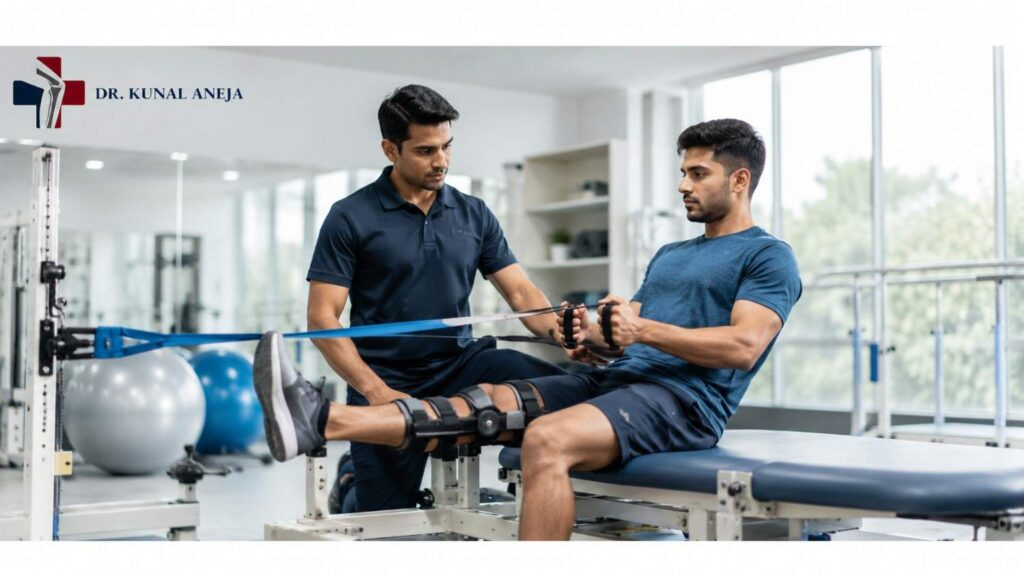
● A physiotherapist rebuilds movement, strength and function through rehabilitation
● A physiotherapist cannot diagnose or treat fractures or dislocations
● The two work best together: diagnosis first for serious injuries, then rehab
The question is not which one is better, it is which one you need first. That depends on how bad the injury looks.
Meet Dr. Kunal Aneja: Orthopaedic Surgeon for Sports Injuries
Athletes and weekend players want a surgeon who will not rush to the operating table and will not delay it when it is needed.
Professional Highlights:
● Chief Orthopaedic Surgeon and Managing Director, Naveda Healthcare Centres
● Extensive training in arthroscopic, minimally invasive surgical technique
● Over 12 years of experience across trauma, sports injuries and joint disorders
● Fellowships from Delhi Orthopaedic Association (Ganga Hospital), SICOT (Hungary) and Asia Pacific Arthroplasty Society
Players can share their injury details on WhatsApp to find out whether they need a doctor or can start with physiotherapy.
When is a physiotherapist a reasonable first step?
Starting with a physio is sensible when:
● It is a mild sprain or muscle strain and you can still walk and move the joint
● There is no visible deformity and no suspicion of a broken bone
● Pain is manageable and improving, not worsening
● The problem is stiffness or weakness after rest or a minor injury
For many everyday strains, early rehab is the treatment. It does not need a surgeon, but it does need someone who will say so if it is not working.
When should you see an orthopaedic doctor first?
Do not start with physio if:
● You suspect a fracture or dislocation
● You cannot put weight on the leg or lift the arm
● The joint gives way, locks or feels unstable
● There was a pop at the time of injury, followed by swelling
● Pain is severe or getting worse over a few days
These signs suggest a structural injury, such as a ligament tear, and rehab alone will not fix a structure that is broken.
Which sports injuries does Dr. Aneja treat?
1. ACL and Ligament Injuries
Reconstruction and repair through arthroscopy, with a plan matched to your sport.
2. Meniscus Tears
Repair or removal assessed case by case, protecting long-term knee health.
3. Shoulder Injuries
Rotator cuff tears, impingement and dislocations, treated by arthroscopic technique where needed.
4. Tendon and Overuse Injuries
Assessed first for conservative treatment, with surgery only if rehab fails.
5. Fractures from Sport
Managed within the wider orthopaedic and trauma services.
How do you know if physiotherapy is working?
Look at measurable progress:
● Strength and range of motion are improving week by week
● Pain is easing during daily activity
● You can return to light activity with confidence
● If these have levelled off after 6 to 8 weeks of consistent rehab, it is time to talk to a surgeon
A plateau is information. It does not mean you failed rehab, it means the injury may need more than rehab can give.
Why choose Dr. Kunal Aneja for a sports injury?
Key advantages:
● Arthroscopic training for less invasive surgery and faster recovery
● Conservative treatment tried first where it is appropriate
● Rehabilitation planned with physiotherapy and rehabilitation support
● Honest advice on when to return to play
A good sports injury plan covers the whole route, from diagnosis to being back on the field.
What does the treatment journey look like?
1. Assessment
The injury, how it happened and what you do in your sport are discussed.
2. Examination and imaging
Stability and movement are checked, with MRI if the diagnosis needs it.
3. Decision
Rehab, injection or surgery is recommended, with reasons.
4. Treatment
Physiotherapy or arthroscopic surgery as needed.
5. Return to play
A paced return, based on strength and stability, not a calendar date.
Benefits of seeing the right person early
✔ Serious injuries are caught before they are rehabbed the wrong way
✔ Mild injuries are not over-investigated
✔ Less time lost from sport
✔ Lower chance of re-injury
✔ Surgery only when it will genuinely help
The right first appointment saves time, scans and sometimes a season.
Why Delhi patients trust Dr. Kunal Aneja
● Orthopaedic surgeon with arthroscopic and sports-injury experience
● Rohini and Shalimar Bagh practice for North and West Delhi
● Plain advice on doctor versus physio, without selling surgery
● Direct WhatsApp access for quick questions
● Thousands of orthopaedic procedures behind each recommendation
Players value a surgeon who will say “start with physio” as readily as “this needs surgery”.
Conclusion
For a mild strain, a physiotherapist is a sensible start. For anything that looks structural, such as a suspected fracture, an unstable joint or an injury that is not improving, an orthopaedic doctor should come first. Dr. Kunal Aneja helps you work out which side of that line your injury falls on.
For questions about a sports injury, email drkunalaneja@gmail.com or call (+91) 98112 11503. Follow patient updates on Instagram, YouTube and Facebook.
Book your sports injury consultation with Dr. Kunal Aneja here
FAQs
Should I see a doctor or a physiotherapist first for a sports injury?
For a mild sprain or strain, a physiotherapist is a reasonable start. See an orthopaedic doctor first if you suspect a fracture or dislocation, cannot bear weight, or the joint feels unstable.
Can a physiotherapist diagnose a fracture?
No. A physiotherapist cannot diagnose or treat fractures or dislocations. These need an orthopaedic doctor and usually an X-ray.
How long should I try physiotherapy before seeing a surgeon?
If there is no clear improvement after 6 to 8 weeks of consistent physiotherapy, it is appropriate to discuss the injury with an orthopaedic surgeon.
Do all sports injuries need surgery?
No. Many heal with rest and rehabilitation. Surgery is considered for injuries such as complete ligament tears or those that fail to improve with rehab.
What sports injuries does an orthopaedic surgeon treat?
Ligament tears such as the ACL, meniscus tears, shoulder injuries including rotator cuff problems and dislocations, and fractures from sport.