
Overview
Hip pain can severely limit mobility, independence, and overall quality of life. When conservative treatments such as medication, physiotherapy, or lifestyle changes fail to provide relief, Total Hip Replacement in Delhi emerges as a highly effective solution. Modern hip replacement techniques restore joint function, alleviate pain, and help patients return to active, everyday life. Among Delhi’s leading orthopaedic specialists, Dr. Kunal Aneja is recognized for his expertise in hip replacement surgery, advanced techniques, and patient-centric care.
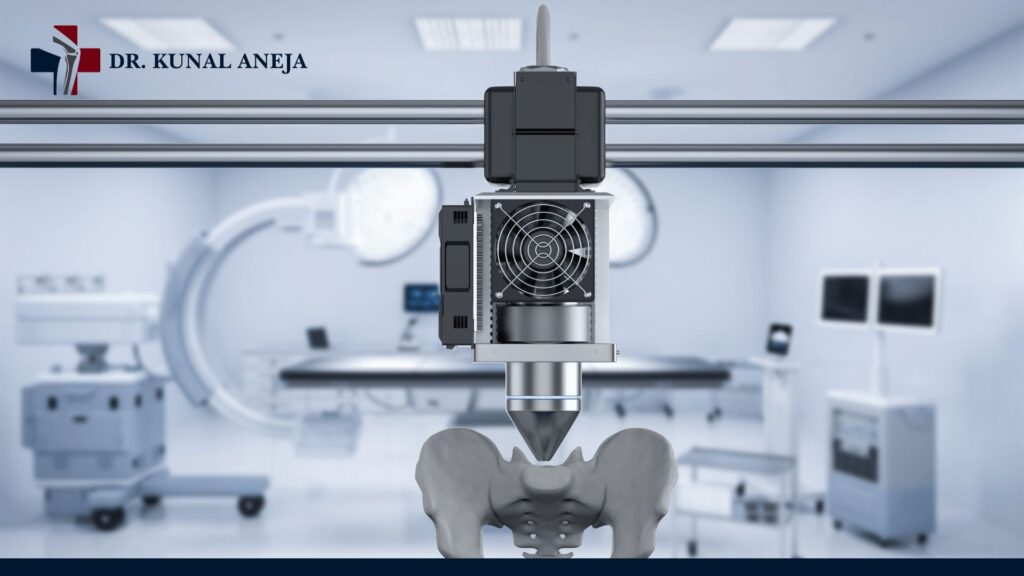
Understanding Total Hip Replacement (THR)
Total Hip Replacement, also known as Total Hip Arthroplasty, is a surgical procedure in which the damaged hip joint is replaced with a prosthetic implant. The hip is a ball-and-socket joint, and damage from arthritis, trauma, or age-related wear can lead to severe pain, stiffness, and reduced mobility.
THR is recommended when:
- Non-surgical treatments fail to alleviate pain
- Hip arthritis significantly limits movement
- Hip fractures, avascular necrosis, or deformities compromise joint function
Common Indications for Total Hip Replacement
Patients may require hip replacement due to:
- Osteoarthritis: The most common cause of hip degeneration.
- Rheumatoid arthritis: Autoimmune inflammation leading to joint damage.
- Post-traumatic arthritis: Arthritis developing after hip fractures or injuries.
- Avascular necrosis: Loss of blood supply to the femoral head.
- Congenital or developmental hip deformities: Conditions affecting the hip’s natural alignment.
Timely intervention prevents further joint deterioration and restores pain-free movement.
Step-by-Step Process of Total Hip Replacement
Dr. Kunal Aneja follows a structured, patient-focused approach to ensure safe, effective, and durable hip replacement outcomes.
Step 1: Comprehensive Preoperative Evaluation
Before surgery, patients undergo a detailed assessment to ensure they are suitable candidates. This includes:
- Medical history and physical examination
- Imaging studies (X-rays, CT scan, MRI if necessary)
- Blood tests and routine health checks
- Gait and movement analysis
Step 2: Personalized Surgical Planning
Using advanced imaging and templating techniques, Dr. Aneja creates a precise surgical plan for each patient:
- Selection of the most suitable implant type and size
- Determining optimal orientation and alignment
- Planning for minimally invasive or robotic-assisted procedures if appropriate
This customized approach ensures better implant longevity and natural joint movement.
Step 3: Hip Replacement Surgery
The surgery involves replacing the damaged hip components with prosthetic implants. The procedure is typically performed under regional or general anesthesia and includes:
- Removal of the damaged femoral head and cartilage.
- Preparation of the acetabulum (hip socket) to receive the new implant.
- Insertion of the prosthetic components (metal, ceramic, or polyethylene materials).
- Verification of joint stability, leg length, and range of motion.
Step 4: Immediate Postoperative Care
Post-surgery care is critical for successful recovery:
- Patients begin moving with assistance within 24–48 hours
- Pain management strategies are implemented for comfort
- Early mobilization reduces the risk of complications such as blood clots
Dr. Aneja emphasizes patient safety and monitoring during the initial postoperative period.
Step 5: Rehabilitation and Physiotherapy
Structured rehabilitation ensures that patients regain strength, flexibility, and function:
- Early physiotherapy to restore joint mobility
- Gradual weight-bearing exercises to strengthen muscles
- Balance and gait training
- Lifestyle guidance for long-term joint protection
Most patients achieve significant improvement within 4–6 weeks, with full mobility restored over 3–6 months.
Advanced Techniques Used in Delhi for Hip Replacement
Delhi offers some of the most advanced facilities and techniques in hip replacement surgery:
1. Minimally Invasive Hip Replacement
- Smaller incisions
- Less muscle damage
- Reduced postoperative pain
- Faster rehabilitation
2. Robotic-Assisted Hip Replacement
- 3D planning for implant placement
- Improved accuracy and alignment
- Optimized biomechanics and range of motion
3. Cemented and Cementless Implants
- Choice depends on bone quality and patient profile
- Ensures optimal fixation and long-term durability
4. Advanced Prosthetic Materials
- Metal, ceramic, and polyethylene options to reduce wear and maximize longevity
Benefits of Total Hip Replacement
Patients undergoing hip replacement experience:
- Significant pain relief and improved quality of life
- Restored mobility for walking, climbing stairs, and daily activities
- Improved joint alignment and stability
- Reduced dependency on pain medications
- Long-lasting results (15–25 years or more)
Why Choose Dr. Kunal Aneja for Total Hip Replacement in Delhi
Dr. Kunal Aneja is recognized as a leading specialist in hip replacement due to:
- Global Expertise: Training and exposure from centres of excellence in Australia, UK, Malaysia, Hungary, Indonesia, and India
- Precision Surgery: Use of modern techniques, minimally invasive approaches, and robotic assistance
- Personalized Care: Each patient receives a customized treatment plan for optimal results
- Holistic Rehabilitation: Emphasis on structured post-surgery physiotherapy for complete recovery
- High Success Rates: Proven outcomes with long-lasting pain relief and functional improvement
Patients across Delhi, NCR, and India trust Dr. Aneja for world-class hip replacement care.
Postoperative Recovery Tips
Successful recovery involves:
- Following physiotherapy schedules consistently
- Using walking aids initially as advised
- Avoiding high-impact activities until cleared by the surgeon
- Maintaining a healthy weight to reduce stress on the hip
- Attending follow-up appointments to monitor implant function
Adherence to these guidelines ensures smooth rehabilitation and prolonged implant life.

Conclusion
Total Hip Replacement in Delhi offers life-changing benefits for individuals suffering from chronic hip pain, arthritis, or post-traumatic joint damage. By combining advanced surgical techniques, personalized treatment plans, and structured rehabilitation, patients can achieve pain-free movement, improved mobility, and enhanced quality of life.
FAQs
1. How do I know if I need a total hip replacement?
Ans. Persistent hip pain, stiffness, and limited mobility despite medications or physiotherapy may indicate the need for surgery.
2. How long does a hip implant last?
Ans. Modern implants typically last 15–25 years, depending on patient activity and care.
3. Is robotic or minimally invasive hip replacement available in Delhi?
Ans. Yes, top orthopaedic surgeons like Dr. Kunal Aneja perform minimally invasive and robotic-assisted hip replacements for better precision and faster recovery.
4. How soon can I walk after total hip replacement surgery?
Ans. Most patients begin walking with support within 24–48 hours post-surgery.
5. Why should I choose Dr. Kunal Aneja for total hip replacement in Delhi?
Ans. Dr. Aneja combines global expertise, advanced surgical techniques, and patient-focused care to deliver safe, effective, and long-lasting hip replacement outcomes.