
Overview
Robotic knee replacement has become one of the most aggressively marketed terms in Delhi orthopaedics. Every major hospital and many smaller clinics now advertise robotic surgery capability, and patients searching for the best knee replacement option are frequently steered toward robotic procedures without a clear explanation of what the technology actually adds to their specific case versus what a well-performed traditional knee replacement would achieve. The truth is that robotic assistance genuinely helps certain cases and adds limited value to others. Using it as a marketing upgrade rather than a clinical tool is what has created the widespread confusion about whether patients actually need it. Before paying a significant premium for robotic surgery, consulting a robotic knee replacement specialist in Delhi who evaluates your specific anatomy and tells you honestly whether robotic assistance adds meaningful benefit to your case is what makes that premium worthwhile or avoidable.
Among the trusted names for robotic and traditional knee replacement in Delhi NCR, Dr. Kunal Aneja at Naveda Healthcare Centre, Rohini, offers both techniques and recommends based on candidacy assessment, not marketing preference.
What Robotic Knee Replacement Actually Does
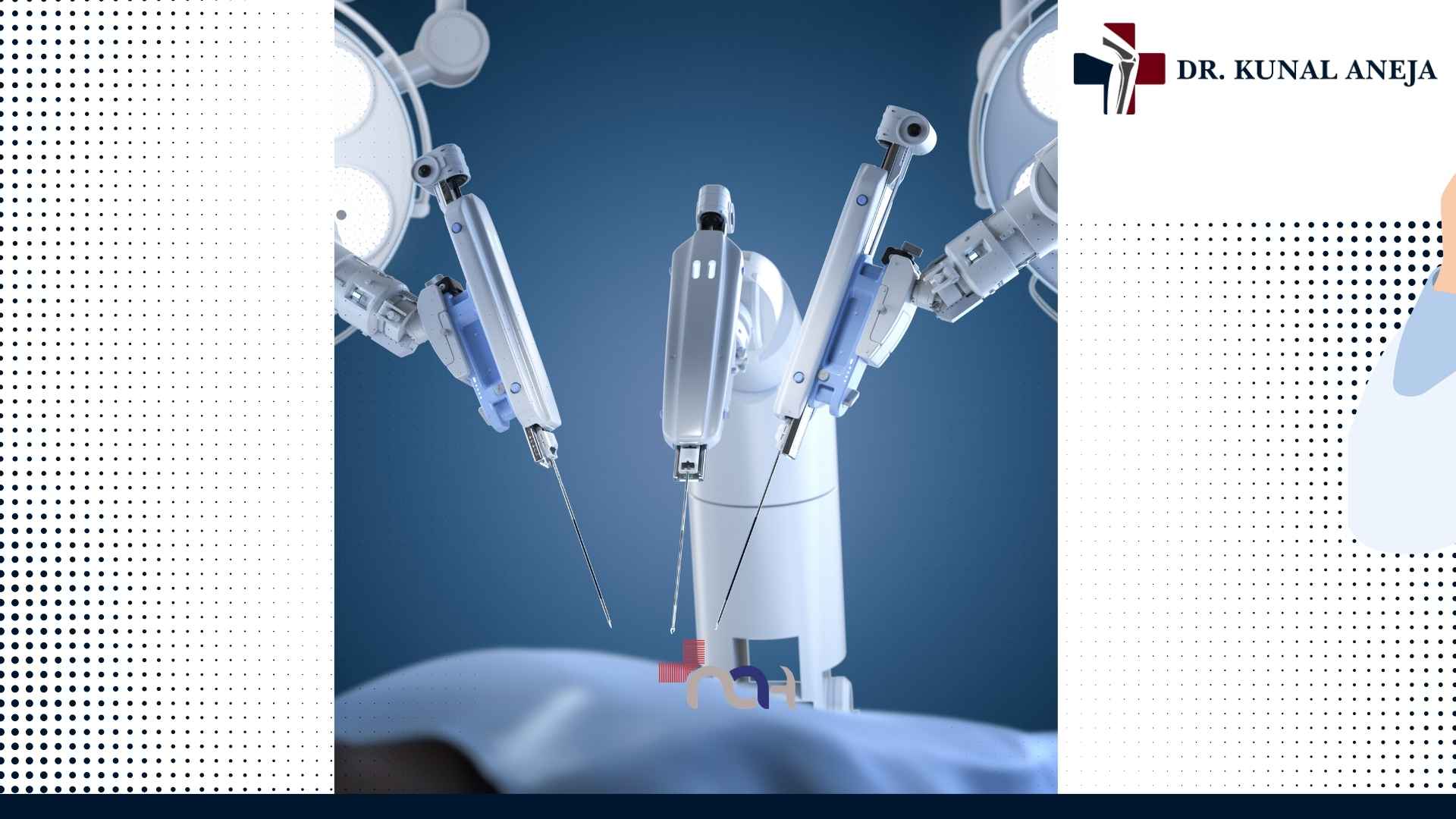
Robotic knee replacement uses a computer-guided robotic arm to assist the surgeon in placing the implant within a pre-planned surgical boundary, based on a 3D map of the patient’s specific knee anatomy created before the procedure.
What it genuinely adds:
● Pre-surgical 3D mapping of the patient’s individual knee anatomy
● Guided implant placement within planned boundaries, reducing alignment variability
● Real-time feedback during the procedure when the surgeon’s movement approaches the planned boundary
● Potentially improved precision for cases where anatomical complexity makes freehand alignment more variable
What it does not change:
● The surgeon still makes every clinical decision, the robot assists, not decides
● Recovery timeline is not meaningfully faster than well-performed traditional surgery
● Implant brand and quality remain separate from the robotic assistance system
● A poorly planned robotic case can still produce a poor outcome if the pre-surgical mapping is not accurate
The robot is a tool that improves precision in the right hands and for the right cases. It does not replace surgical skill or good clinical judgement.
Meet Dr. Kunal Aneja – Honest Robotic Knee Specialist in Delhi
Patients considering robotic knee replacement in Delhi want a surgeon who explains what the technology adds to their specific case, not one who defaults to recommending it because it commands a higher fee.
Professional Highlights:
● Triple board-certified: MBBS, MS, DNB, M.Ch (Edinburgh)
● Expertise in both robotic-assisted and traditional knee replacement technique
● Fellowship training in Arthroplasty including complex and revision cases
● A candidacy-assessment approach to robotic technique recommendation
● Available at Naveda Healthcare Centre Rohini and Max Super Specialty Hospital Shalimar Bagh
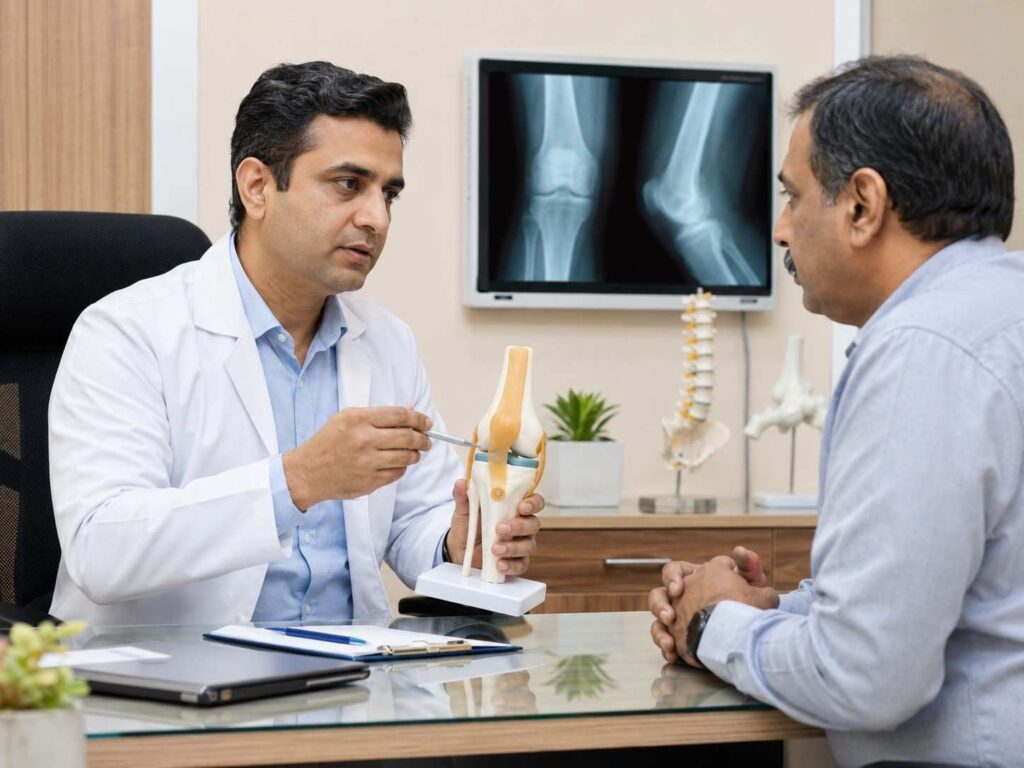
Dr. Kunal Aneja evaluates each patient’s imaging and anatomy before recommending robotic or traditional technique, with a clear explanation of why one approach adds more value than the other for that specific case.
Who Actually Benefits From Robotic Knee Replacement
Robotic assistance adds meaningful value when:
● The knee has significant anatomical complexity or deformity that increases alignment variability
● Prior hardware or previous surgery makes standard landmark-based alignment less reliable
● The patient’s anatomy falls outside the standard sizing range for conventional technique
● The surgeon has specific, high-volume experience with the robotic system being used
● The case is a revision where existing implant hardware complicates planning
Who Does NOT Need Robotic Knee Replacement
Traditional technique is equally appropriate when:
● The knee has normal anatomy without significant deformity
● The surgeon has high case volume and demonstrated precision with traditional technique
● The patient’s anatomy falls within standard sizing and alignment parameters
● The added cost of robotic surgery would represent a significant financial burden without proportionate clinical benefit
● The patient is being offered robotic surgery primarily as a marketing differentiator rather than based on clinical candidacy
A fellowship-trained surgeon with high traditional case volume achieves comparable alignment outcomes to robotic assistance for straightforward cases in most published studies.
Why Choose Dr. Kunal Aneja for Robotic Knee Assessment in Delhi?
Key advantages:
● Expertise in both robotic and traditional technique under one surgeon
● An honest, candidacy-based recommendation rather than a default preference
● Pre-surgical 3D mapping for confirmed robotic cases
● Fellowship-trained Arthroplasty expertise that produces excellent traditional outcomes
● Available across Rohini and Shalimar Bagh for pre-operative and post-operative follow-up
A surgeon who tells you when traditional surgery is equally appropriate for your case is one whose recommendation of robotic surgery for another case is worth believing.
Signs You Should Get a Proper Robotic Candidacy Assessment
Consider a consultation if:
● You have been recommended robotic knee replacement without a clear explanation of why your specific anatomy benefits from it
● You want to understand whether your case genuinely justifies the additional cost
● You have significant knee deformity or prior hardware that may make robotic assistance genuinely useful
● You want a second opinion from a surgeon experienced in both techniques
● You have already been told traditional surgery is your only option and want to understand if robotic would help
Dr. Kunal Aneja reviews imaging and anatomy before recommending robotic or traditional technique, with a clear, case-specific rationale for whichever is recommended.
Step-by-Step Robotic vs Traditional Decision Journey
1. Imaging and Anatomy Assessment
X-rays and any prior surgical history are reviewed to assess anatomical complexity.
2. Candidacy Evaluation
Whether robotic assistance adds meaningful precision benefit for the specific case is assessed honestly.
3. Technique Recommendation
Robotic or traditional surgery is recommended with a clear, case-specific rationale.
4. Pre-Surgical Planning
3D mapping proceeds for robotic cases, or standard pre-operative planning for traditional technique.
5. Surgery and Rehabilitation
The procedure proceeds with structured physiotherapy beginning within 24 to 48 hours.
Benefits of an Honest Robotic Candidacy Assessment
✔ A technique recommendation matched to your actual anatomy rather than marketing preference
✔ Understanding whether the premium cost of robotic surgery is clinically justified for your case
✔ Confidence in the technique used based on a case-specific rationale
✔ Access to both options under one surgeon without needing to choose the clinic before the technique
✔ A surgeon whose robotic recommendation carries genuine clinical weight rather than financial motivation
Patients who understand why their specific technique was chosen consistently have more confidence going into surgery and more realistic expectations about what the technology adds.
Recovery and Rehabilitation: The Key to Success
Post-surgery care for both techniques includes:
● Physiotherapy beginning within 24 to 48 hours of the procedure
● Progressive strength and mobility exercises through structured phases
● Regular follow-up confirming implant alignment and healing progress
● Milestone-based return to normal activity rather than a fixed calendar date
● Long-term implant monitoring through periodic follow-up appointments
Recovery timeline is comparable between robotic and traditional technique for equivalent cases. The technology changes the precision of placement, not the biology of healing.
Why Delhi Patients Trust Dr. Kunal Aneja for This Decision
● Expertise in both robotic and traditional knee replacement under one surgeon
● An honest, candidacy-based recommendation without commercial bias toward either option
● Fellowship-trained Arthroplasty expertise producing excellent outcomes with both techniques
● Available across Naveda Healthcare Rohini and Max Shalimar Bagh
● Direct imaging opinion available via WhatsApp before a formal consultation
This honest, dual-technique approach is what makes Dr. Kunal Aneja the trusted choice for patients who want to understand whether robotic knee surgery is genuinely right for them before paying the premium.
Conclusion
Robotic knee surgery adds real value to the right cases and limited value to others. Understanding which category your case falls into requires an honest assessment from a surgeon experienced in both techniques, not a default recommendation from one who only offers one option. Dr. Kunal Aneja at Naveda Healthcare Centre in Rohini and Max Shalimar Bagh provides exactly that assessment.
For a robotic versus traditional candidacy evaluation, call +91 98112 11503 or email drkunalaneja@gmail.com. Follow surgical content on Instagram and YouTube.
Book your knee replacement candidacy assessment with Dr. Kunal Aneja here
FAQs
Is robotic knee replacement actually better than traditional surgery in Delhi?
For anatomically complex cases, yes. For straightforward cases where the surgeon has high traditional case volume, outcomes are comparable. Dr. Kunal Aneja assesses candidacy before recommending either. Call +91 98112 11503.
Does Dr. Kunal Aneja offer robotic knee replacement in Delhi?
Yes. Dr. Aneja offers both robotic-assisted and traditional knee replacement and recommends based on each patient’s specific anatomy rather than a default preference.
How much more does robotic knee replacement cost in Delhi?
The premium varies by hospital and system used. A candidacy assessment with Dr. Kunal Aneja confirms whether the additional cost is clinically justified for your specific case before you commit.
Is recovery faster after robotic knee replacement?
Not meaningfully. The technology improves alignment precision during surgery, not the biology of healing. Recovery timelines are comparable between techniques for equivalent cases.
Can I get a remote opinion on whether I need robotic or traditional surgery?
Yes. Send your imaging via WhatsApp at +91 98112 11503 for an initial opinion before a formal consultation.
Who should actually consider robotic knee replacement in Delhi?
Patients with significant anatomical complexity, prior hardware, or deformity that increases alignment variability are the clearest candidates. For straightforward anatomy, traditional technique by an experienced surgeon is often equally appropriate.