
If you are searching for the Best ACL Surgeon in Delhi or the Best Meniscus Surgeon in Delhi, the first step is understanding what has actually happened inside your knee. ACL tears and meniscus injuries can both cause pain, swelling, stiffness, and difficulty walking, but they are not the same injury and they are not treated in the same way.
Many patients visit an orthopaedic clinic after a sports injury, a sudden twist, or a fall and say the same thing: “My knee does not feel right.” The knee may feel unstable, locked, swollen, or painful while bending. Because the symptoms overlap, a proper diagnosis matters before starting treatment.
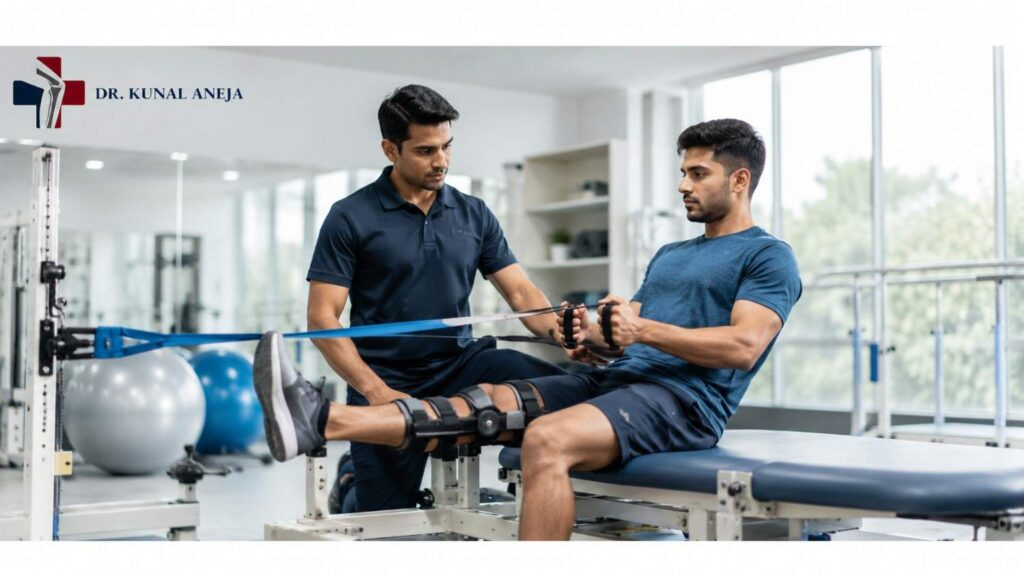
What Is an ACL Tear?
The anterior cruciate ligament, or ACL, is one of the key stabilising ligaments inside the knee. It controls rotation and prevents the shin bone from sliding forward against the thigh bone. This ligament becomes especially important during running, jumping, pivoting, and quick direction changes. For accurate ACL tear treatment Delhi, the injury must be assessed clinically and with appropriate imaging.
An ACL tear often happens during sports such as football, cricket, basketball, badminton, or skiing. However, it can also occur during a simple twisting injury, road traffic accident, or awkward landing. Many patients report hearing or feeling a sudden pop at the time of injury.
Common ACL Tear Symptoms
- A popping sensation at the time of injury
- Rapid swelling within a few hours
- Knee instability or a feeling that the knee may give way
- Difficulty continuing sport or bearing weight
- Pain while pivoting, running, or changing direction
What Is a Meniscus Injury?
The meniscus is a C-shaped cartilage cushion between the thigh bone and shin bone. Each knee has a medial and lateral meniscus. These cushions absorb shock, distribute body weight, and protect the joint surface. A meniscus injury specialist Rohini can evaluate whether the tear is minor, repairable, or needs arthroscopic treatment.
Meniscus tears are commonly caused by twisting the knee while the foot is planted. In younger patients, they often happen during sports. In older patients, the meniscus can become weaker over time and may tear even with routine activities such as squatting, climbing stairs, or getting up from the floor.
Common Meniscus Tear Symptoms
- Pain along the inner or outer side of the knee joint
- Clicking, catching, or locking sensation
- Difficulty fully bending or straightening the knee
- Swelling that may develop gradually
- Pain during squatting, kneeling, or twisting movements
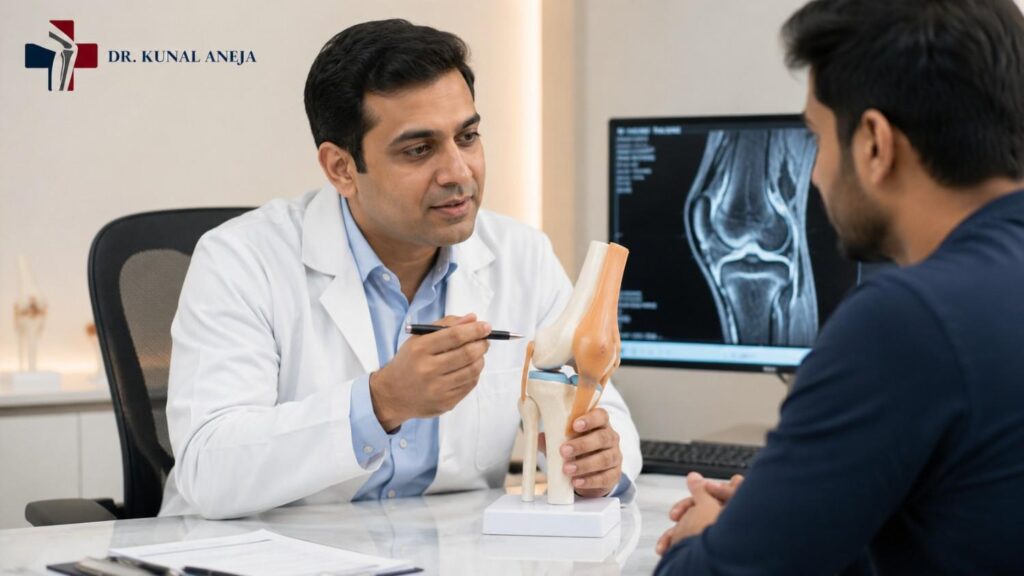
ACL Tear vs Meniscus Injury: How to Tell the Difference
The symptoms can look similar, but there are some practical differences. ACL injuries are more strongly associated with instability, sudden swelling, and a clear giving-way episode. Meniscus injuries more commonly cause joint-line pain, locking, clicking, and trouble with deep bending.
| Feature | ACL Tear | Meniscus Injury |
| Typical cause | Pivoting, landing, sudden direction change | Twisting knee with foot planted, squatting, degeneration |
| Main symptom | Instability or giving way | Locking, clicking, joint-line pain |
| Swelling | Often rapid, within hours | May be gradual or moderate |
| Treatment focus | Stability restoration and rehabilitation | Cartilage preservation, repair, or selective trimming |
Can ACL and Meniscus Injuries Happen Together?
Yes. Combined ACL and meniscus injuries are common, especially in sports-related trauma. When the ACL tears, the knee may shift abnormally, placing extra force on the meniscus. This is why delayed diagnosis can sometimes lead to additional damage inside the knee.
A consultation with an experienced knee injury doctor Delhi helps identify whether one structure or multiple structures are injured. This is important because combined injuries often need a more carefully planned treatment and rehabilitation strategy.
How the Diagnosis Is Confirmed
Clinical Examination
A specialist will assess knee swelling, movement, joint-line tenderness, ligament stability, and pain patterns. Tests such as the Lachman test, anterior drawer test, McMurray test, and Thessaly test can help narrow the diagnosis.
Imaging
X-rays are useful to rule out fractures or arthritis, but they do not show ligament and cartilage injuries clearly. MRI is usually the most useful imaging test for confirming ACL tears, meniscus tears, and associated soft tissue damage.
Treatment Options for ACL Tears and Meniscus Injuries
Treatment is not identical for both injuries. The right plan depends on age, activity level, instability, tear pattern, associated injuries, and patient goals.
ACL Tear Treatment
Complete ACL tears in active patients often need arthroscopic ACL reconstruction, especially when the knee feels unstable or the patient wants to return to sport. Partial tears in selected patients may be managed with bracing, physiotherapy, and close monitoring.
Meniscus Injury Treatment
Small tears in the outer blood-supply zone may heal with rest and physiotherapy. Repairable tears are ideally treated with meniscus repair to preserve cartilage. In cases where repair is not possible, a partial meniscectomy may be considered to remove only the damaged fragment.
Why Choose Dr Kunal Aneja for Knee Injury Treatment in Delhi
Dr Kunal Aneja is an internationally trained orthopaedic surgeon with focused expertise in sports medicine, arthroscopy, joint preservation, and knee injury management. Patients looking for the Best ACL Surgeon in Delhi or the Best Meniscus Surgeon in Delhi often need more than surgery; they need accurate diagnosis, honest guidance, and structured rehabilitation.
His approach is based on preserving joint function wherever possible. Surgery is recommended only when it is clinically required, and when it is needed, minimally invasive arthroscopic techniques are used for precision and faster recovery.
When Should You Book a Consultation?
Do not ignore knee swelling, repeated giving-way episodes, locking, or pain after a twisting injury. Early diagnosis gives you more treatment options and reduces the risk of long-term knee damage.
To get an expert assessment, book a consultation with Dr Kunal Aneja at Naveda Healthcare Centre, Rohini, or connect through the official website of Dr Kunal Aneja.
FAQs
Can I walk with an ACL tear?
Some patients can walk after an ACL tear, but the knee may feel unstable. Continuing activity without diagnosis can worsen meniscus or cartilage damage.
Can a meniscus tear heal without surgery?
Some small meniscus tears may heal with rest, physiotherapy, and activity modification. Larger, unstable, or locked tears may need arthroscopic treatment.
How do I know whether I need ACL surgery?
Surgery is usually considered when the knee remains unstable, the tear is complete, or the patient wants to return to sports or high-demand activities.
Can ACL and meniscus surgery be done together?
Yes. If both injuries are present and surgery is required, ACL reconstruction and meniscus repair may be performed during the same arthroscopic procedure.
Who should I consult for knee injury treatment in Delhi?
You should consult an orthopaedic surgeon with experience in sports injuries, arthroscopy, ACL reconstruction, and meniscus repair.