
Overview
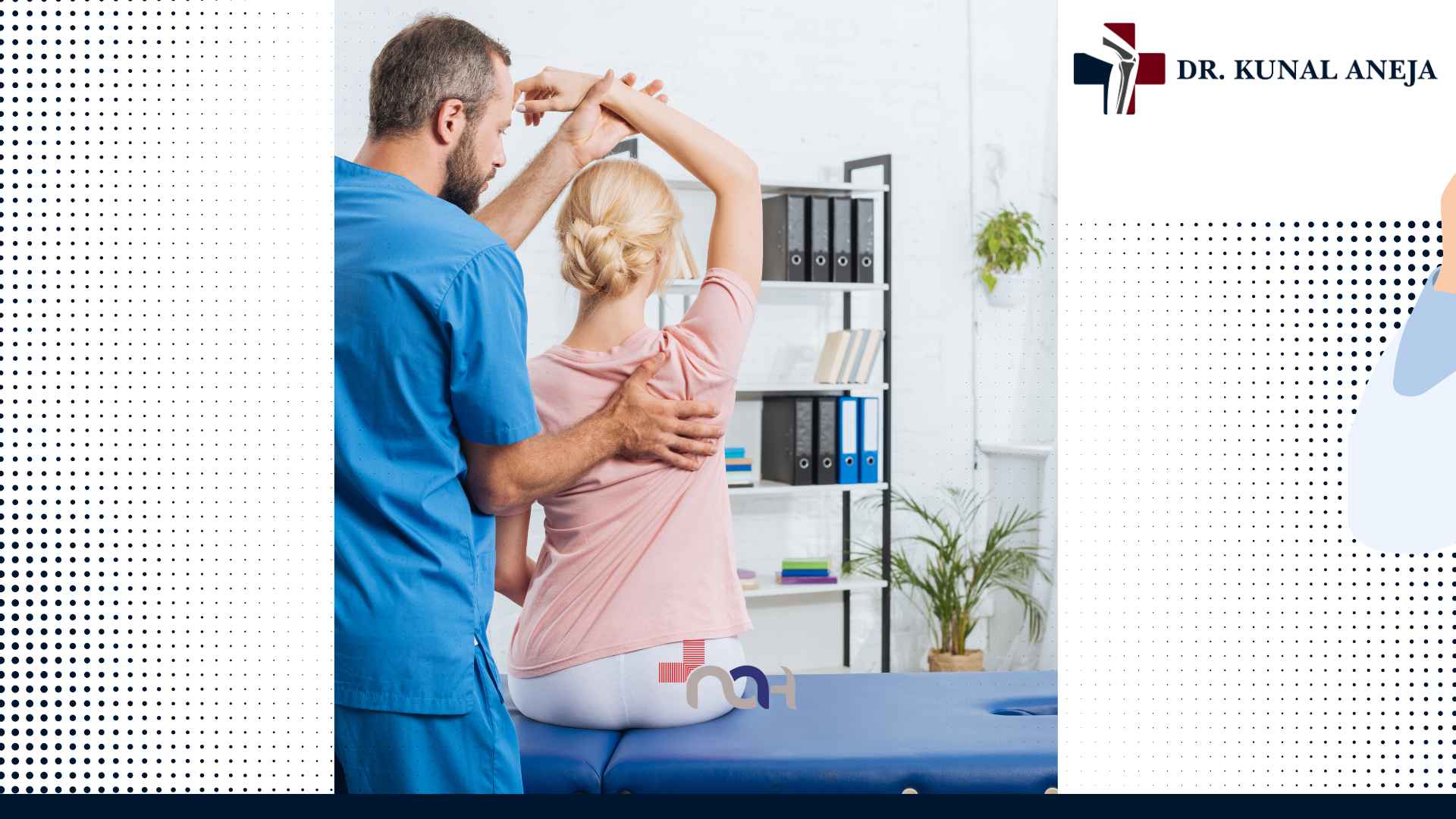
A shoulder dislocation is one of the most painful acute injuries a person can experience, and also one of the most mismanaged over the long term. The immediate treatment, reduction of the joint back into its socket, is usually handled well at an emergency setting. What happens after that is where most patients receive inadequate guidance. A single shoulder dislocation in a young, active patient carries a very high risk of recurrence, sometimes exceeding 80 percent, depending on age and activity level. Yet many patients are simply told to rest, given a sling, and discharged without any discussion of whether the structural damage to the stabilising structures warrants surgical repair or whether a properly designed rehabilitation program can restore adequate stability. The decision between surgery and rehabilitation for shoulder dislocation in Delhi is not a one-size answer, and getting it wrong in either direction leads to either an unnecessary procedure or a shoulder that keeps dislocating. Before accepting either recommendation without understanding the reasoning, consulting an orthopaedic shoulder specialist in Delhi NCR who evaluates the structural damage and patient-specific risk factors before deciding is what actually produces the right outcome.
Among the trusted names in this space, Dr. Kunal Aneja at Naveda Healthcare Centre, Rohini is a fellowship-trained orthopaedic surgeon with specific expertise in shoulder arthroscopy and sports medicine, serving patients across Delhi NCR, Rohini, and North Delhi.
What Does a Shoulder Dislocation Specialist Do?
Core responsibilities include:
• Assessing the structural damage to the labrum, capsule, and surrounding structures after dislocation
• Evaluating recurrence risk based on age, activity level, and imaging findings
• Recommending surgical stabilisation or a structured rehabilitation program based on these factors
• Performing arthroscopic shoulder stabilisation when surgery is the right choice
• Designing a rehabilitation program that genuinely restores shoulder stability when surgery is deferred
The decision between surgery and rehabilitation for shoulder dislocation should be based on structural damage assessment and recurrence risk, not on a generic preference for one approach over the other.
Meet Dr. Kunal Aneja – Trusted Shoulder Specialist in Delhi NCR
Patients dealing with shoulder dislocation in Delhi want a specialist who explains the decision between surgery and rehabilitation based on their specific structural damage and activity level, not a blanket recommendation.
Professional Highlights:
• Triple board-certified: MBBS, MS, DNB, M.Ch (Edinburgh)
• Specific expertise in shoulder arthroscopy and sports medicine
• Diploma in Football Medicine (FIFA) and Diploma in SICOT (Cape Town)
• Fellowship training in arthroscopy across the UK, Australia, Malaysia, and Hungary
• Available at Naveda Healthcare Centre Rohini, Max Super Specialty Hospital Shalimar Bagh, and Saroj Medical Institute Rohini
Dr. Kunal Aneja’s shoulder dislocation consultations assess structural damage through imaging before presenting both surgical and non-surgical options, with a clear explanation of the recurrence risk that informs the recommendation.
When Non-Surgical Treatment Is the Right Choice
Structured rehabilitation is typically appropriate when:
• The dislocation is a first event in an older, less active patient
• Imaging shows minimal structural damage to the labrum or capsule
• The patient’s activity level doesn’t involve overhead sport or high-risk shoulder loading
• Age and bone quality make surgical risks less favourable than rehabilitation risks
A well-designed rehabilitation program following shoulder dislocation focuses on rotator cuff strengthening and dynamic shoulder stability, not just range of motion restoration.
When Surgery Is the Better Long-Term Choice
Surgical stabilisation is typically appropriate when:
• The patient is young and highly active with a high recurrence risk
• Imaging shows significant labral or Bankart lesion damage
• The dislocation has already recurred once or more
• The patient participates in overhead sport or contact sport at a competitive level
• Bone loss is present at the glenoid or humeral head
Arthroscopic Bankart repair restores the structural stability that rehabilitation alone cannot recover when there is significant labral damage.
Advanced Shoulder Dislocation Treatment Options
At Naveda Healthcare Centre, shoulder dislocation treatment is matched to the structural damage and recurrence risk identified:
1. Structured Rehabilitation Program
For patients whose risk profile makes non-surgical management the appropriate starting point.
2. Arthroscopic Bankart Repair
For patients with labral damage and high recurrence risk, offering:
• Keyhole repair of the detached labral tissue that stabilises the shoulder
• Less tissue disruption than open surgical stabilisation
• A faster return to sport than open Latarjet procedure in appropriate cases
• Available through the clinic’s treatments offered page
3. Latarjet Procedure
For patients with significant glenoid bone loss where soft tissue repair alone is insufficient for stability.
4. Recurrent Dislocation Management
For patients who have already dislocated multiple times and need a comprehensive structural assessment before deciding on the right surgical approach.
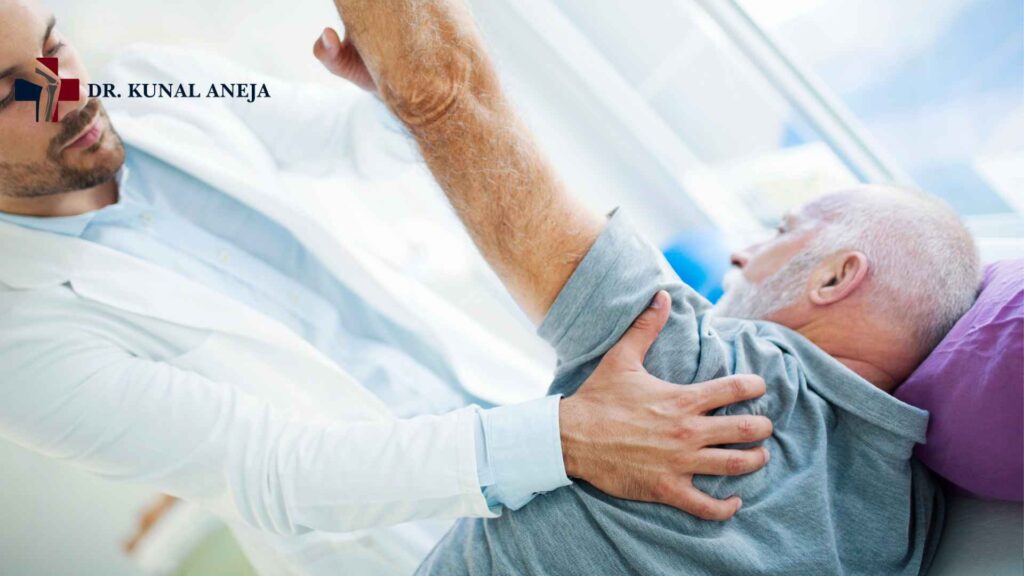
Why Choose Dr. Kunal Aneja for Shoulder Dislocation Treatment in Delhi?
Key advantages:
• Fellowship-trained shoulder arthroscopy expertise
• A structural damage assessment before recommending surgery or rehabilitation
• Both surgical and non-surgical options explained at every consultation
• Available across Rohini, Shalimar Bagh, and North Delhi
• Patients across Delhi NCR trust Dr. Aneja specifically for shoulder instability
Patients searching for the best shoulder dislocation treatment in Delhi or the top shoulder specialist near me will find that Dr. Aneja’s decision-making process is built around their specific structural damage and recurrence risk, not a generic protocol.
Step-by-Step Shoulder Dislocation Treatment Journey
1. Initial Consultation
Dislocation history, recurrence pattern, and activity level are assessed together.
2. Imaging Assessment
MRI confirms labral damage, capsular injury, and any bone loss at the glenoid or humeral head.
3. Treatment Decision
Surgery or structured rehabilitation is recommended based on structural damage and recurrence risk.
4. Treatment
Arthroscopic repair or a structured rehabilitation program proceeds based on the decision.
5. Return-to-Sport Clearance
Shoulder stability and strength are confirmed before clearance for full activity.
Benefits of the Right Shoulder Dislocation Decision
✔ A treatment matched to actual structural damage rather than a generic protocol
✔ Reduced risk of recurrence through the appropriate stabilisation approach
✔ Arthroscopic technique when surgery is chosen, minimising tissue disruption
✔ A rehabilitation program that genuinely restores dynamic stability when surgery is deferred
✔ Clear, milestone-based return-to-sport clearance rather than a fixed calendar date
Getting the surgery versus rehabilitation decision right for shoulder dislocation consistently produces better long-term stability than a generic protocol applied regardless of the patient’s structural damage.
Recovery and Rehabilitation: The Key to Success
Post-treatment care includes:
• Following the specific rehabilitation plan matched to the treatment chosen
• Attending all scheduled follow-up appointments to confirm healing and stability
• Protecting the shoulder from high-risk loading during the recovery window
• Milestone-based clearance for sport and overhead activity
• Reporting any instability or pain during recovery for plan adjustment
Most patients achieve reliable shoulder stability within 4 to 6 months of appropriate treatment, with return to contact sport dependent on the specific procedure and rehabilitation progress.
Why Delhi NCR Patients Choose Dr. Kunal Aneja for Shoulder Dislocation
• Fellowship-trained shoulder arthroscopy expertise across global centres
• A structural-damage-first decision-making process for every patient
• Both surgical and non-surgical options presented at every consultation
• Available across Rohini, North Delhi, and Shalimar Bagh
• Direct imaging opinion available via WhatsApp before a formal consultation
Patients across Delhi NCR, Rohini, and North Delhi searching for the best shoulder dislocation specialist near me trust Dr. Aneja’s evidence-based, damage-specific approach to this commonly mismanaged injury.
Conclusion
The decision between surgery and rehabilitation for shoulder dislocation is one of the most consequential choices in sports orthopaedics, and it should be based on structural damage assessment and recurrence risk, not on a default preference for one approach. Dr. Kunal Aneja at Naveda Healthcare Centre, Rohini, evaluates every shoulder dislocation with exactly that kind of evidence-based, damage-specific assessment.
For questions or to share imaging before a formal visit, reach the clinic at drkunalaneja@gmail.com or call +91 98112 11503. Follow results on YouTube.
Take the first step toward the right shoulder dislocation treatment and book a consultation here.
Frequently Asked Questions
Who is the best shoulder dislocation specialist in Delhi NCR?
Dr. Kunal Aneja at Naveda Healthcare Centre, Rohini, offers evidence-based, structural-damage-first shoulder dislocation treatment. Follow updates on Instagram.
Does every shoulder dislocation need surgery?
No. The decision depends on age, activity level, structural damage, and recurrence risk, assessed individually through imaging and clinical evaluation.
What is a Bankart lesion and why does it matter?
A Bankart lesion is a tear of the labrum at the front of the shoulder socket, the most common structural injury from dislocation. When significant, it dramatically increases recurrence risk and often warrants surgical repair.
How long does recovery take after arthroscopic shoulder stabilisation?
Most patients achieve reliable stability within 4 to 6 months, with return to contact sport depending on rehabilitation progress.
Can I get a remote opinion on my shoulder MRI?
Yes. MRI images can be shared via WhatsApp at +91 98112 11503 for an initial opinion before booking a formal consultation.