
Overview
Back pain that radiates down the leg, along with numbness or tingling, is often more than just a muscle strain; it can point to a slipped disc pressing on a nearby nerve. In cases like this, consulting an orthopaedic surgeon for slipped disc treatment in Delhi who can properly diagnose the cause matters more than continuing with generic back pain remedies.
Among the trusted names in this space, Dr. Kunal Aneja at Naveda Healthcare Centre approaches spine-related complaints with the same structured, imaging-led diagnostic process used across his broader orthopaedic practice.
What Does Slipped Disc Treatment Actually Involve?
Core elements include:
• Confirming the diagnosis through MRI, not just symptoms alone
• Identifying which nerve, if any, is being compressed
• Recommending conservative management when appropriate
• Considering surgical intervention only when conservative care fails
• Building a rehabilitation plan to prevent recurrence
Not every slipped disc needs surgery, which is exactly why a proper diagnosis matters before deciding on a treatment path.
Meet Dr. Kunal Aneja – Trusted Name in Spine and Orthopaedic Care
Patients dealing with back pain and radiating leg symptoms want a specialist who won’t jump straight to surgery. Dr. Aneja’s approach starts with a conservative-first philosophy wherever it’s genuinely appropriate.
Professional Highlights:
• Fellowship-trained Orthopaedic Surgeon with complex trauma sub-specialisation
• M.Ch (Edinburgh) with training across multiple international centres
• Senior Consultant at Max Super Specialty Hospital, Shalimar Bagh
• A structured, imaging-first diagnostic approach
• A conservative-first philosophy, reserving surgery for cases that genuinely need it
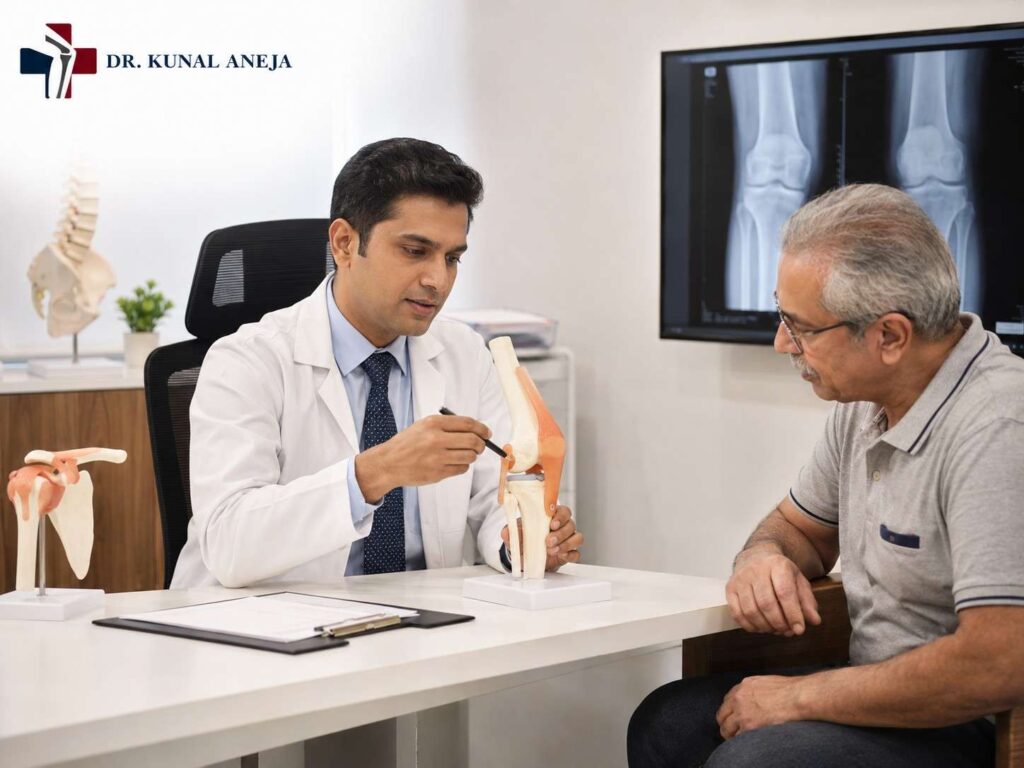
Dr. Aneja explains disc-related MRI findings directly to patients, so the diagnosis and reasoning behind the recommended treatment are both fully understood.
What Is a Slipped Disc?
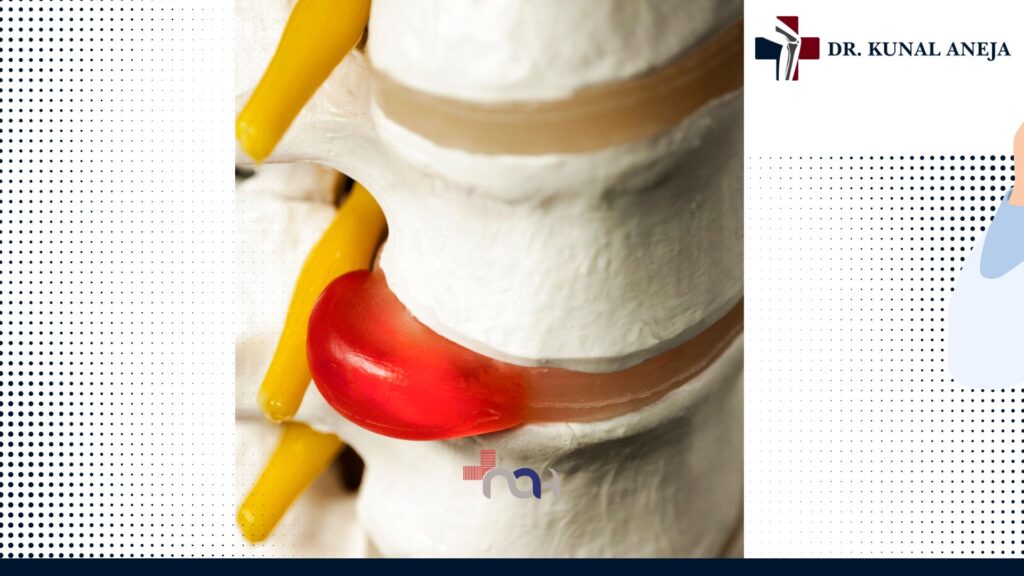
A slipped, or herniated, disc happens when the soft inner material of a spinal disc pushes through its outer layer, sometimes pressing on nearby nerves and causing pain, numbness, or weakness along the nerve’s path.
Common Symptoms of a Slipped Disc
1. Localized Back or Neck Pain
Pain concentrated at the site of the affected disc, often worsening with certain movements.
2. Radiating Nerve Pain
Depending on which disc is affected, this can include:
• Pain radiating down the leg (sciatica) for lower back discs
• Pain radiating into the arm for neck discs
• Numbness or tingling along the nerve’s path
• Muscle weakness in the affected limb
3. Worsening Pain with Specific Movements
Bending, sitting, or coughing can worsen symptoms depending on the disc involved.
4. Reduced Mobility
Stiffness or reduced range of motion in the back or neck.
Common Causes of a Slipped Disc
• Age-related wear and disc degeneration
• Repetitive strain from poor lifting technique
• A sudden injury or awkward twisting movement
• Prolonged poor posture, particularly with desk-based work
• Genetic predisposition to disc-related issues
Why Choose Dr. Kunal Aneja for Slipped Disc Treatment in Delhi?
Key advantages:
• Imaging-confirmed diagnosis before recommending treatment
• A conservative-first approach where genuinely appropriate
• Access to advanced surgical options when conservative care fails
• Direct explanation of MRI findings during consultation
• A structured rehabilitation plan to reduce recurrence risk
A specialist who considers conservative management first, rather than defaulting to surgery, protects patients from unnecessary procedures.
Signs You Should See a Specialist
Consult an orthopaedic surgeon if you experience:
• Back or neck pain radiating into an arm or leg
• Numbness or tingling along a specific nerve path
• Muscle weakness in an arm or leg
• Pain that worsens with bending, sitting, or coughing
• Symptoms that haven’t improved with rest or basic pain relief
Dr. Kunal Aneja confirms the diagnosis through MRI before recommending a specific treatment path.
Treatment Options for a Slipped Disc
1. Conservative Management
Physiotherapy, activity modification, and pain management for milder cases.
2. Medication and Injections
Targeted anti-inflammatory treatment to manage pain during the healing process.
3. Structured Physiotherapy
Core-strengthening and posture-correction exercises to support the spine.
4. Surgical Intervention
Reserved for cases with significant nerve compression or when conservative treatment hasn’t resolved symptoms.
Step-by-Step Slipped Disc Treatment Journey
1. Initial Consultation
Symptoms and history are reviewed in detail.
2. MRI Confirmation
Imaging confirms the disc involved and the extent of any nerve compression.
3. Treatment Decision
Conservative or surgical treatment is recommended based on severity.
4. Treatment
The recommended plan begins, whether physiotherapy-led or surgical.
5. Rehabilitation and Prevention
A structured plan supports recovery and reduces recurrence risk.
Benefits of Proper Slipped Disc Diagnosis
✔ Confirmed diagnosis rather than guessing based on symptoms alone ✔ Conservative treatment considered before surgery ✔ Targeted treatment based on which nerve is actually affected ✔ A rehabilitation plan aimed at preventing recurrence ✔ Reduced risk of unnecessary surgical intervention
Getting an accurate, imaging-confirmed diagnosis is what allows treatment to actually match the underlying problem.
Why Delhi Patients Trust Naveda Healthcare Centre for Spine Care
• Imaging-led, conservative-first diagnostic philosophy
• Access to advanced surgical options when genuinely needed
• Direct, MRI-based explanation during consultation
• A structured rehabilitation approach to prevent recurrence
• Direct access to the doctor via WhatsApp for imaging review
This structured, honest approach is what helps patients avoid unnecessary procedures while still getting timely treatment when surgery genuinely is needed.
Conclusion
A slipped disc doesn’t automatically mean surgery, but it does need a proper, imaging-confirmed diagnosis before deciding on the right treatment path. Dr. Kunal Aneja at Naveda Healthcare Centre leads with exactly that kind of conservative-first, evidence-based approach.
His approach favors understanding the actual cause before recommending treatment, which is part of why patients trust this process for back and neck-related nerve symptoms.
Take the first step toward an accurate diagnosis and book a consultation here.
Frequently Asked Questions
Who offers the best slipped disc treatment in Delhi?
Dr. Kunal Aneja at Naveda Healthcare Centre offers imaging-led diagnosis and conservative-first slipped disc treatment. Follow updates on Instagram.
Does a slipped disc always require surgery?
No, many cases improve with physiotherapy, activity modification, and conservative management. Surgery is reserved for cases that don’t respond or involve significant nerve compression.
What’s the difference between a slipped disc and general back pain?
A slipped disc typically involves radiating pain, numbness, or weakness along a specific nerve path, rather than pain confined to the back alone.
How is a slipped disc actually diagnosed?
Through an MRI, which confirms which disc is affected and whether it’s compressing a nerve.
Can I get an initial opinion on my back pain remotely?
Yes, MRI or X-ray images can be shared for an initial opinion via WhatsApp at +91 98112 11503.