
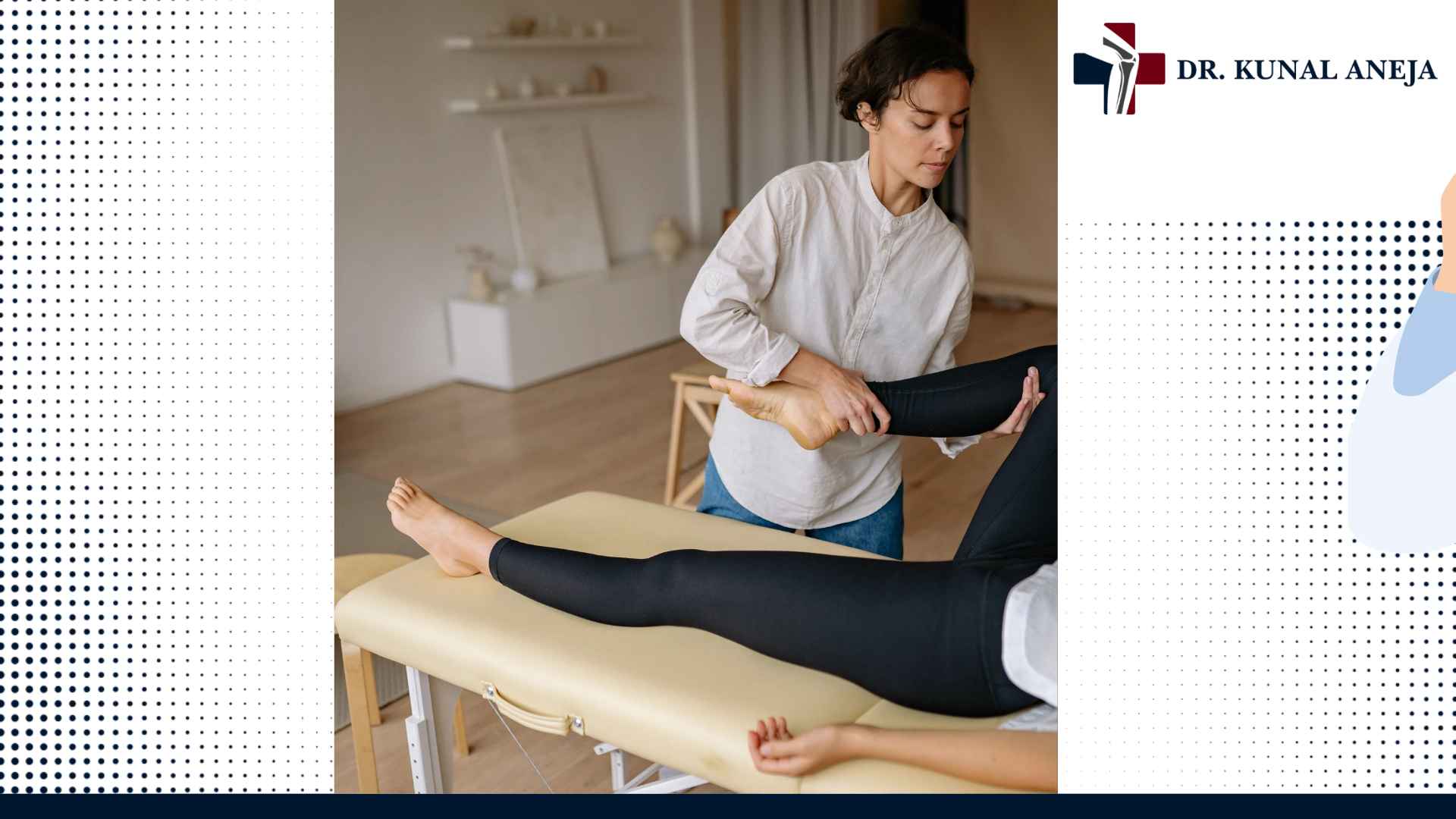
Knee arthroscopy is a keyhole procedure used to look inside the knee and repair or remove damaged tissue, such as a torn meniscus, loose fragments or an injured ligament. Physiotherapy is often tried first, and many knee problems improve with it. Arthroscopy is more likely to help when there is a mechanical problem, such as a locking knee or a repairable tear, and less likely to help when the pain comes from general wear and tear.
Overview
A knee that hurts is one of the most common reasons people walk into an orthopaedic clinic in Rohini. And one of the most common questions is, “Doctor, do I need an operation or will exercises do?” There is no one-size answer. Some knees do beautifully with physiotherapy alone. Others will never settle until a torn piece of cartilage is dealt with. Knowing which group you belong to saves you from both unnecessary surgery and unnecessary delay. If you want a clear opinion, you can book a consultation with Dr. Kunal Aneja.
Dr. Kunal Aneja is a Senior Consultant Orthopaedic Surgeon and the Managing Director of Naveda Healthcare Centre in Rohini. His listed services include knee and shoulder arthroscopies, ligament reconstruction and sports injury management. We have already written about knee arthroscopy and meniscus treatment. This post focuses on a different question: how do you decide between arthroscopy and physiotherapy?
What Is Knee Arthroscopy?
In simple words
● A minimally invasive procedure done through small cuts around the knee
● A camera shows the inside of the joint on a screen
● The surgeon can trim, repair or remove damaged tissue using fine instruments
● It is used for diagnosis as well as treatment
Arthroscopy is a repair tool for specific problems, not a general cure for knee pain.
Meet Dr. Kunal Aneja
Dr. Kunal Aneja is a Senior Consultant Orthopaedic Surgeon in Delhi and Managing Director of Naveda Healthcare Centre. His listed qualifications include MBBS, MS, DNB, M.Ch (Edinburgh), Dip. SICOT (Cape Town) and a Diploma in Football Medicine (FIFA), along with fellowships and memberships in national and international orthopaedic bodies. He consults at Naveda Healthcare Centre in Rohini, Max Super Specialty Hospital in Shalimar Bagh and Saroj Medical Institute in Rohini.
Professional Highlights
● Senior Consultant Orthopaedic Surgeon and Managing Director, Naveda Healthcare Centre
● Qualifications include M.Ch (Edinburgh), DNB and a Diploma in Football Medicine (FIFA)
● Knee conditions treated include meniscus injuries, ACL and other ligament injuries, cartilage lesions and loose bodies
● Services include knee arthroscopy, ligament reconstruction and knee replacement
Message the clinic on WhatsApp, or watch knee health videos on YouTube.
When Is Physiotherapy a Good First Step?
Many knee complaints improve with a well-planned exercise programme, especially when there is no locking, no major instability and no clear surgical injury.
Physiotherapy often helps when
● Pain comes from muscle weakness or poor movement patterns
● A mild meniscus or cartilage problem is causing pain but not locking
● You have patellofemoral pain, which is pain around the kneecap
● The knee feels stiff or achy after activity but is otherwise stable
● Arthritis is mild to moderate, and strength and weight control can reduce the load
● You are recovering from a sprain or a minor ligament injury
Good physiotherapy is more than a few machine sessions. It builds strength around the knee, improves balance and corrects the way you walk, squat and climb stairs. The clinic’s page on physiotherapy and rehabilitation gives an idea of how this is approached.
When Does Arthroscopy Become More Likely?
Arthroscopy is more likely to be advised when a structural problem inside the knee is causing symptoms that exercise cannot fix.
1. A Knee That Locks or Catches
If the knee gets stuck, as if something is blocking movement, it may be due to a torn meniscus flap or a loose fragment.
2. A Repairable Meniscus Tear
Some meniscus tears, particularly in younger people, can be repaired. Our guide to meniscus treatment explains repair versus removal.
3. Ligament Injuries Such as ACL Tears
ACL reconstruction is commonly done with arthroscopic techniques in people who want to return to sport or have an unstable knee. See also our overview of sports injuries.
4. Loose Bodies in the Joint
Small pieces of bone or cartilage can float in the joint and cause pain or locking.
5. Cartilage Lesions
Some cartilage injuries may be treated through arthroscopic techniques, depending on size, location and the patient’s age.
If the problem is mechanical, surgery may be useful. If it is mostly weakness or wear, rehab usually comes first.
What About Arthritis?
This is where many people get confused. Knee arthroscopy is often not helpful when pain comes mainly from general wear and tear arthritis. In those cases, treatment usually focuses on strengthening, weight control, medicines, injections and, in advanced stages, knee replacement. Our guide on knee replacement recovery explains what happens when arthritis reaches that point. Your surgeon will decide after reviewing your examination and imaging.
How Do You Decide? Questions to Ask Yourself
Think about
● Does my knee lock, catch or give way?
● Did the pain start after a clear injury or twisting event?
● Have I tried physiotherapy properly for several weeks?
● What do the examination and MRI actually show?
● Is the problem likely to heal alone, or is it a tear that will not?
● What are my goals: daily comfort, sport or work?
These questions often point you toward the right direction. Do not decide from an MRI report alone, since many knees show changes on scans without causing symptoms.
Why Choose Dr. Kunal Aneja for Knee Care?
Key advantages
● Experience across arthroscopy, ligament surgery and knee replacement
● Honest advice about whether you need surgery at all
● Access to rehabilitation and physiotherapy guidance
● Practice at Rohini and Shalimar Bagh
● An option for an orthopaedic second opinion before you decide
Unsure about surgery? Send your reports on WhatsApp and ask for guidance.
Signs You Should Get Your Knee Checked
● Locking or a sensation of something catching
● Swelling that comes back after activity
● Pain after a twisting injury
● Giving way when you walk or pivot
● Pain that has not improved with weeks of rest and exercise
● Difficulty straightening or bending the knee fully
What Is the Knee Arthroscopy Journey?
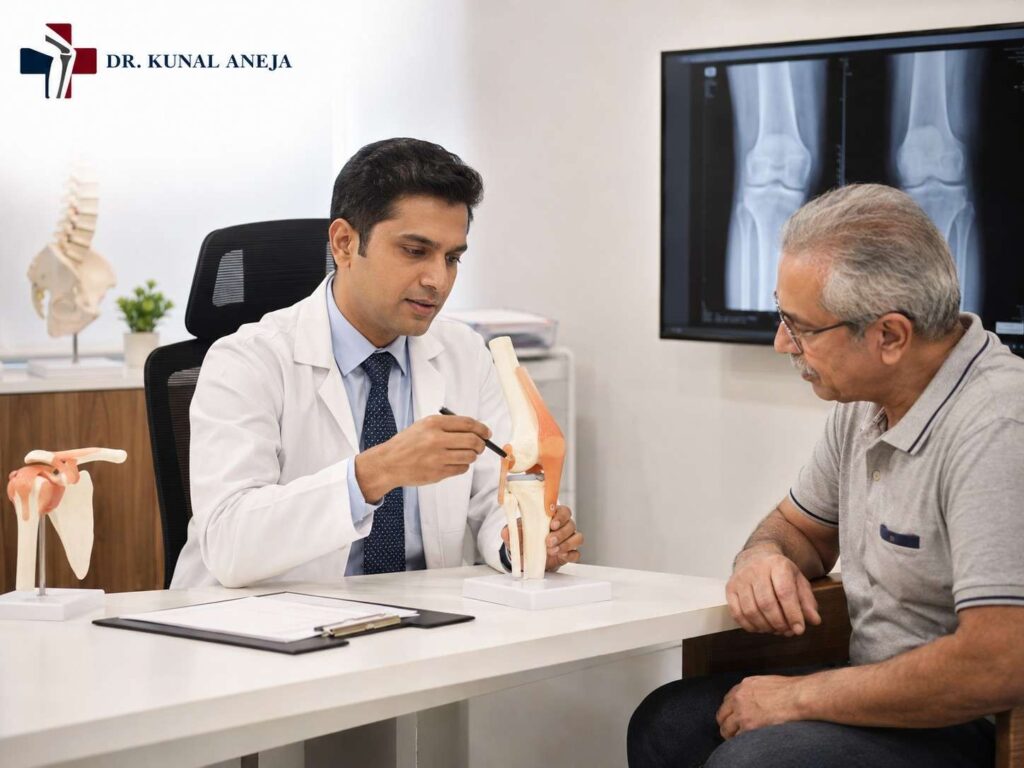
- Consultation: Your symptoms, injury history and goals are discussed.
- Examination and imaging: The knee is examined, and X-rays or MRI are reviewed.
- Trial of non-surgical care: Physiotherapy and medicines are tried when suitable.
- Procedure: If needed, arthroscopy is done through small cuts.
- Rehabilitation: A structured plan restores movement and strength.
What Are the Benefits of Choosing the Right Option?
✔ You avoid surgery that is not needed
✔ You do not delay a repair that is needed
✔ Smaller cuts and a clear view of the joint when arthroscopy is done
✔ A rehab plan matched to your knee and your goals
✔ A faster, safer return to everyday life and sport
What Should Recovery Look Like After Arthroscopy?
Recovery depends on what was done. After a simple clean-up, many people walk soon after surgery and return to daily tasks quickly. After a meniscus repair or ligament reconstruction, a longer period of protected movement and structured rehabilitation is needed. Your surgeon and physiotherapist will tell you what to expect for your specific procedure.
Simple guidelines
● Follow instructions on walking, crutches and bending
● Do your exercises regularly, not just when the knee hurts
● Keep the wound clean and dry as advised
● Use ice and elevation if your doctor recommends them
● Report fever, spreading redness, calf pain or severe swelling immediately
Rehabilitation is not an add-on. It is half of the treatment.
Why Do Rohini Patients Trust Dr. Kunal Aneja?
● A clinic close to home at Naveda Healthcare Centre in Rohini
● Clear explanations of what the scan really shows
● Advice that does not push surgery when exercise may do
● Knee health tips on Instagram and Facebook
● Easy contact through WhatsApp and phone
Conclusion
Knee arthroscopy is helpful when a mechanical problem inside the knee needs repair, such as a locking meniscus tear, loose fragments or a torn ligament. Physiotherapy is often the right first step for pain that comes from weakness, mild wear or minor injuries. The decision should come from your examination, your scan, your symptoms and your goals, not from fear or from a quick search. If you are in Rohini and wondering which path suits your knee, Dr. Kunal Aneja and the Naveda Healthcare team can help you decide.
Contact Dr. Kunal Aneja
Email: drkunalaneja@gmail.com
Phone: +91 98112 11503
Book your knee consultation with Dr. Kunal Aneja here
FAQs
What is knee arthroscopy?
It is a keyhole procedure in which a camera and fine instruments are used through small cuts to diagnose and treat problems inside the knee joint.
Do I need knee arthroscopy or physiotherapy?
Physiotherapy is often tried first. Arthroscopy is more likely when there is locking, a repairable tear or a ligament injury that exercise cannot fix.
Does knee arthroscopy help arthritis?
Not usually for general wear-and-tear pain. Arthritis is often managed with exercise, weight control, medicines, injections and, in advanced cases, knee replacement.
How long is recovery after knee arthroscopy?
It depends on the procedure. A simple clean-up usually allows a quicker return than a ligament reconstruction or meniscus repair.
Where can I consult for knee arthroscopy in Rohini?
You can book with Dr. Kunal Aneja at Naveda Healthcare Centre in Rohini, call +91 98112 11503 or message on WhatsApp.