
Your knee has been slowing you down for too long. You may have tried medicines, physiotherapy, lifestyle changes, knee braces, and injections. But when pain starts affecting walking, stairs, sleep, or daily movement, your doctor may finally suggest knee replacement surgery.
At this point, the biggest question is not only whether surgery is needed. The real question is: who should you trust with it? Choosing the best doctor for robotic knee replacement surgery is one of the most important decisions you will make for your mobility, recovery, and long-term comfort.
This guide explains what robotic knee replacement means, why surgeon experience matters, what questions to ask, and how to choose the right robotic knee replacement surgeon in Delhi.
Quick Answer: What Should You Look For?
To choose the best doctor for robotic knee replacement surgery, look for a surgeon with fellowship training in joint replacement, practical experience with robotic surgery, transparent patient outcomes, access to a well-equipped hospital, and a clear rehabilitation plan after surgery.
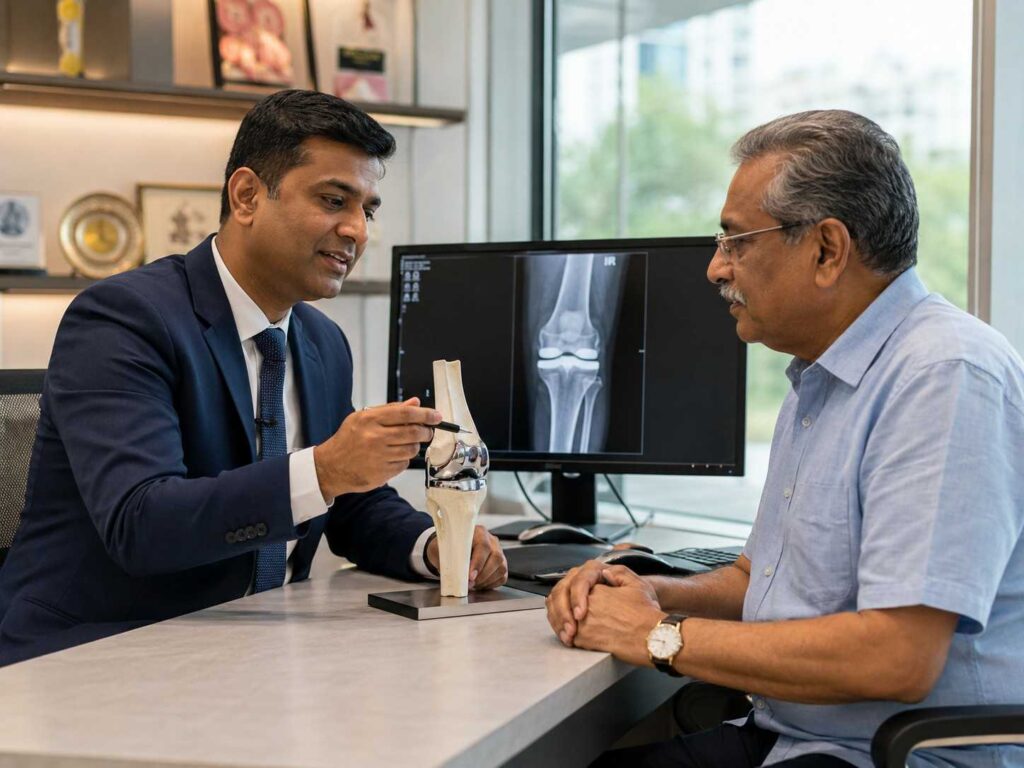
A good surgeon should not rush you. They should explain your condition, discuss non-surgical options where possible, review your X-rays or scans carefully, and help you understand what recovery will realistically look like.
What Is Robotic Knee Replacement?
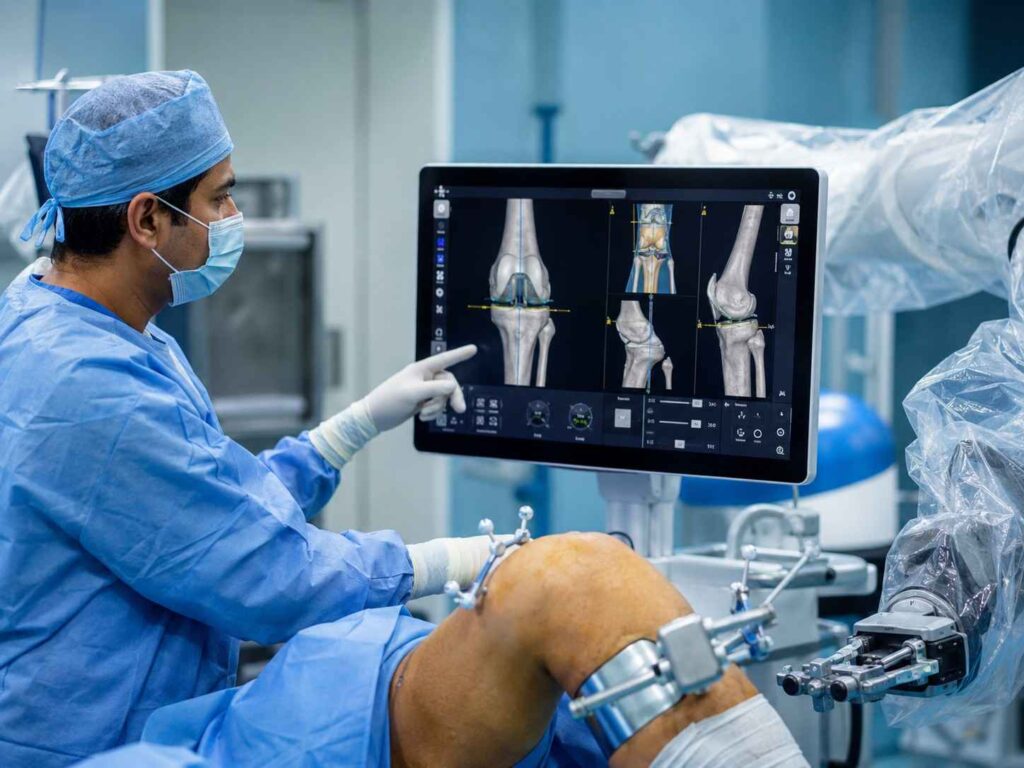
Robotic knee replacement is an advanced form of knee replacement surgery where the surgeon uses robotic assistance for planning, bone preparation, and implant positioning. The robot does not perform the surgery independently. Your surgeon remains in full control throughout the operation.
The robotic system works as a precision tool. It creates or uses a detailed map of your knee and helps the surgeon place the implant more accurately according to your anatomy. This is especially useful because every patient’s knee alignment, bone shape, ligament balance, and wear pattern is different.
Why does precision matter?
Even small errors in implant positioning can affect comfort, movement, implant life, and long-term results. Better alignment can reduce uneven wear and may support a smoother recovery. That is why robotic knee replacement in Delhi is becoming a preferred option for many patients with advanced knee arthritis.
7 Things to Check Before Choosing a Robotic Knee Replacement Surgeon
1. Fellowship training in joint replacement
A general orthopaedic degree is important, but for robotic joint replacement, specialised training matters. Look for a knee replacement specialist in Delhi who has completed fellowship training in joint replacement or arthroplasty, preferably from reputed national or international centres.
2. Experience with robotic surgery
Robotic technology improves precision, but only when used by a trained and experienced surgeon. Ask how many robotic knee replacement surgeries the doctor has performed and which robotic system is used. Regular hands-on experience is more important than simply having access to technology.
3. Recognised qualifications and credentials
Check the surgeon’s qualifications, board certifications, fellowships, training history, and hospital associations. These details help you understand whether the surgeon has advanced training beyond routine orthopaedic practice.
4. Transparent patient outcomes
The best surgeons are comfortable discussing realistic results. Look for genuine patient reviews, documented recovery experiences, and honest explanations of risks. Avoid anyone who promises perfect results without explaining possible complications, recovery limitations, or follow-up requirements.
5. A hospital with the right infrastructure
Robotic knee replacement needs proper operation theatre setup, trained staff, imaging support, anaesthesia backup, infection-control systems, ICU support if needed, and physiotherapy guidance. A strong hospital setup is part of safe surgical care.
6. Clear communication during consultation
A competent robotic joint replacement surgeon should explain your diagnosis in simple language. They should show you where the knee damage is, why surgery may or may not be needed, what implant options are available, and how the robotic system will help in your case.
7. A proper recovery and rehabilitation plan
Surgery is only one part of the journey. Recovery depends on pain control, walking support, physiotherapy, wound care, follow-ups, and gradual return to normal activity. Ask your surgeon what your first 24 hours, first 2 weeks, and first 3 months may look like.
Questions to Ask Before Making a Decision
Before finalising your surgeon, carry your reports and ask direct questions. Useful questions include: How many robotic knee replacements have you performed? Which robotic system do you use? Am I a good candidate for robotic surgery? What are the risks in my case? How soon can I walk? What physiotherapy will I need? Can I take a second opinion?
The answers will tell you a lot about the doctor’s experience, honesty, and communication style. A reliable surgeon will welcome informed questions instead of avoiding them.
Recovery After Robotic Knee Replacement Surgery
Most patients begin assisted walking within 24 to 48 hours, depending on their health, pain tolerance, age, and surgical condition. Physiotherapy usually starts early to improve movement and reduce stiffness.
During the first 6 to 12 weeks, swelling reduces, walking improves, and patients gradually return to daily activities. Complete recovery can take 3 to 6 months. The exact timeline differs from patient to patient, but robotic precision may support less tissue trauma and a smoother early recovery in suitable cases.
Why Delhi Patients Choose Dr. Kunal Aneja
Dr. Kunal Aneja is a Delhi-based orthopaedic surgeon with focused training in robotic and navigation-assisted joint replacement. He is associated with Naveda Healthcare Centre and Max Super Speciality Hospital, Shalimar Bagh.
His credentials include MBBS, MS, DNB, M.Ch. from Edinburgh, Fellowship of the American College of Surgeons, Fellowship of the International College of Surgeons, Asia Pacific Arthroplasty Society fellowship training across Australia, Malaysia, and Indonesia, University Hospitals Birmingham NHS Trust fellowship in the UK, SICOT fellowship at St. George Teaching Hospital in Hungary, Global Scholar status from the University of Edinburgh, and a Diploma in Football Medicine from FIFA.
Patients often value surgeons who combine technical training with clear explanation. For knee replacement, that matters because patients need to understand not only the surgery, but also preparation, recovery, risks, and long-term care.

Conclusion
Choosing the best doctor for robotic knee replacement surgery should not be based only on advertisements or online claims. Check fellowship-level training, robotic surgery experience, hospital infrastructure, transparent patient outcomes, and a structured rehabilitation plan.
The right surgeon will treat you like a person, not just a procedure. They will explain your options, answer your questions, and help you make a decision with confidence.
To book a consultation with Dr. Kunal Aneja, visit drkunalaneja.com, call +91 98112 11503, or connect through WhatsApp.
Frequently Asked Questions
Is robotic knee replacement better than traditional knee replacement?
For many suitable patients, robotic knee replacement offers more precise implant placement, better planning, and potentially smoother recovery. However, the final outcome still depends strongly on the surgeon’s experience and the patient’s rehabilitation.
How long does recovery take after robotic knee replacement?
Many patients walk with support within 24 to 48 hours. Meaningful recovery usually happens over 6 to 12 weeks, while complete recovery may take 3 to 6 months.
Can I take a second opinion before knee replacement surgery?
Yes. A good surgeon should support second opinions. Knee replacement is an important decision, and patients should feel confident before proceeding.
How do I book an appointment with Dr. Kunal Aneja?
You can book an appointment through drkunalaneja.com, call +91 98112 11503, or use WhatsApp for consultation assistance.