
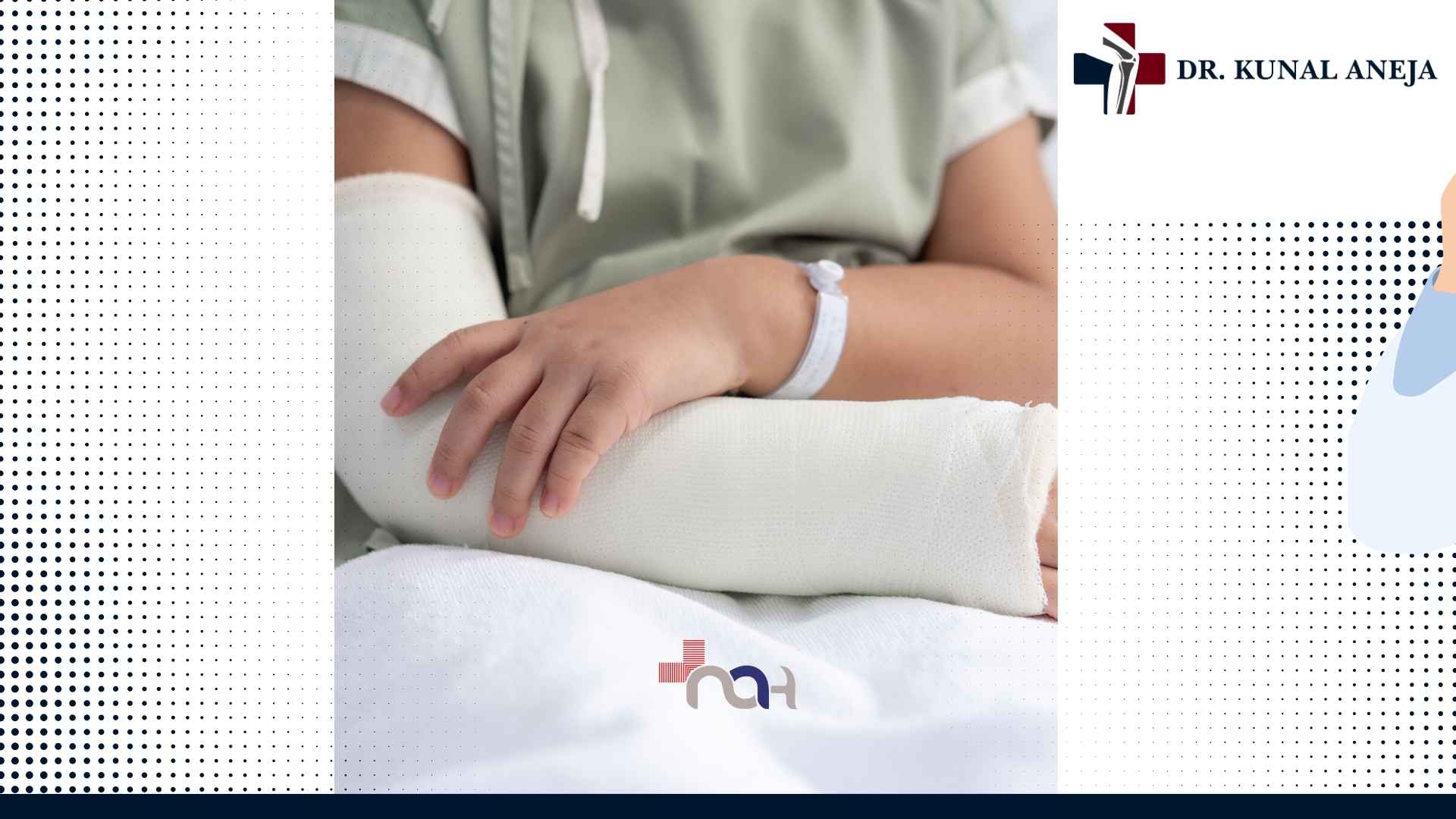
Many stable fractures heal well in a cast. Surgery is considered when the bone is displaced, unstable, extends into a joint, breaks through the skin, or when a cast would keep you off your feet too long. Most fractures heal significantly in 6 to 8 weeks, though full strength can take months.
Overview
The first question after a fracture is rarely “which implant”, it is “will I need an operation?” Most people assume a bad break means surgery and a clean break means plaster, and neither is quite right. Fracture treatment in Delhi depends on how the bone broke, where it broke and whether the pieces still line up, not on how much it hurts or how dramatic the X-ray looks. The sooner that is assessed properly, the more options stay open, which is why seeing an orthopaedic surgeon early matters.
Dr. Kunal Aneja, Chief Orthopaedic Surgeon at Naveda Healthcare Centre in Rohini, treats fractures with the same rule he applies everywhere: no surgery that a cast can do just as well, and no cast where the bone needs fixing.
How do doctors decide between a cast and surgery?
The deciding factors:
● Whether the broken ends of the bone are still lined up, or have shifted
● Whether the fracture is stable or likely to move inside a cast
● Whether the break reaches the joint surface
● Whether the skin is broken, which is called an open fracture
● Your age, activity level, and how long a cast would limit you
A fracture that looks serious but is well aligned can heal in a cast, and one that looks small but involves the joint may need surgery. The pattern matters more than the pain.
Meet Dr. Kunal Aneja: Orthopaedic Surgeon for Fracture Care in Delhi
People with a fracture want a surgeon who will tell them honestly whether surgery is needed, not one who defaults to the operating theatre.
Professional Highlights:
● Chief Orthopaedic Surgeon and Managing Director, Naveda Healthcare Centres
● Over 12 years of experience across trauma, sports medicine and joint disorders
● Fellowships from Delhi Orthopaedic Association (Ganga Hospital) and Asia Pacific Arthroplasty Society
● Practice at Naveda Healthcare Centre, Rohini, and Max Super Specialty Hospital, Shalimar Bagh
For a suspected fracture, patients can send the X-ray on WhatsApp to get a first opinion before visiting.
Will a cast be enough for my fracture?
A cast or splint usually works when:
● The bone ends are still well aligned, or can be gently put back in place
● The fracture is stable and unlikely to shift
● The break does not enter the joint
● A re-check X-ray at one to two weeks confirms nothing has moved
Splinting often lasts three to five weeks, and a cast typically six to eight, according to Cleveland Clinic guidance. Re-checking the X-ray early is what catches a bone that has started to slip.
When is surgery the better option?
Surgery is usually considered when:
● The fragments are displaced or unstable
● The fracture extends into a joint
● The bone has broken through the skin
● A cast would keep you immobile for so long that stiffness and weakness become a problem
● A previous cast treatment has failed
Surgery uses plates, screws or rods to realign and hold the bone. It does not make the bone heal faster, it makes it heal in the right position.
Which fractures does Dr. Aneja treat?
1. Wrist and Forearm Fractures
Commonly treated in a cast, with surgery for badly displaced or joint-involving breaks.
2. Ankle and Leg Fractures
Treated by cast, boot or fixation depending on stability.
3. Hip and Thigh Fractures
Often needing surgery, particularly in older patients, to get them moving early.
4. Shoulder and Upper Arm Fractures
Managed with sling, cast or fixation based on displacement.
5. Complex and Multiple Fractures
Trauma cases handled through the broader orthopaedic and trauma services.
How long does a fracture take to heal?
Typical healing, depending on the bone and the person:
● Most fractures heal significantly in 6 to 8 weeks
● Forearm fractures often take 6 to 10 weeks, and upper arm fractures 8 to 12 weeks
● Ankle fractures commonly take 6 to 10 weeks
● Children and younger adults usually heal faster than older adults or people with diabetes
● Full strength and remodelling can take months, and sometimes longer
A bone can look healed on the X-ray and still be weaker than it will be in six months. That is why return to sport and heavy work is paced, not rushed.
Why choose Dr. Kunal Aneja for fracture treatment?
Key advantages:
● Treatment decisions based on the fracture pattern, not routine
● Surgical and non-surgical options both available under one team
● Physiotherapy planned early so joints do not stiffen
● Local access in Rohini and Shalimar Bagh for repeat X-rays and follow-up
The aim is a bone that heals straight and a limb that works normally again, using the least treatment needed to get there.
What are the stages of recovery?
1. First Assessment
Examination and X-ray, with pain control and a splint to protect the bone.
2. Decision
Cast or surgery is chosen and explained, with the reasons.
3. Treatment
The fracture is set, cast or fixed.
4. Re-check
A follow-up X-ray at one to two weeks confirms the position is holding.
5. Rehabilitation
Movement and strength are rebuilt through physiotherapy and rehabilitation.
Benefits of treating a fracture early and correctly
✔ Better alignment, which means better long-term function
✔ Lower risk of the bone healing crooked or not healing at all
✔ Less joint stiffness and muscle loss with a planned rehab
✔ Clear timelines for work, driving and sport
✔ Avoids both unnecessary surgery and a cast that should not have been used
Fractures that heal in a poor position or fail to heal can need further surgery, so getting the first decision right saves months.
What can go wrong if healing is delayed?
Watch for:
● Pain that is not easing after the expected weeks
● A fracture that has not healed on repeat X-rays, called non-union
● A bone that has healed in the wrong position, called malunion
● Stiffness or loss of function in the neighbouring joint
These are fixable, but they are easier to fix early. A missed follow-up is the most common reason problems are found late.
Why Delhi patients trust Dr. Kunal Aneja
● Years of trauma and joint experience, backed by international fellowships
● Honest cast-versus-surgery advice, explained before any decision
● Rohini and Shalimar Bagh practice for easy follow-up
● Direct WhatsApp access to share X-rays and ask questions
● A recovery plan that includes rehab, not just the procedure
Patients value a surgeon who looks at the whole recovery, from the first splint to the first run.
Conclusion
Whether a fracture needs surgery or just a cast depends on alignment, stability and whether the joint is involved, not on how bad it feels. Dr. Kunal Aneja assesses each break individually and explains the reasoning, so you know why the plan is what it is.
For questions about a fracture, email drkunalaneja@gmail.com or call (+91) 98112 11503. Follow patient updates on Instagram, YouTube and Facebook.
Book your fracture consultation with Dr. Kunal Aneja here
FAQs
Will I need surgery for a fracture?
Not always. Stable, well-aligned fractures often heal in a cast. Surgery is considered when the bone is displaced, unstable, extends into a joint, breaks through the skin, or when a cast would keep you immobile for too long.
How long does a fracture take to heal?
Most fractures heal significantly in 6 to 8 weeks, though it varies by bone, age and health. Full strength and remodelling can take several months.
Does surgery make a fracture heal faster?
No. Surgery realigns and holds the bone so it heals in the right position, but it does not speed up the biology of healing.
How long will I need a cast or splint?
A splint is usually used for three to five weeks and a cast for around six to eight weeks, depending on the fracture. A follow-up X-ray at one to two weeks checks that the bone has not shifted.
What happens if a fracture does not heal properly?
A bone that fails to heal is called a non-union, and one that heals crooked is a malunion. Both can cause pain and loss of function and may need further treatment, which is why follow-up X-rays matter.